Buying yarn for your textile mill or weaving unit may not seem like a strategic decision, but it has a direct and significant impact on your profitability.
Many mills spend ₹50,000 or more every month on yarn, yet still face issues like high costs, inconsistent quality, and supply delays. These problems usually arise not from poor decisions, but from a lack of a structured buying process.
Most mill owners rely on experience and relationships rather than a system. This guide provides a practical framework used by successful mills to optimize yarn procurement.
By following these practices, you can:
- Reduce yarn costs by 15–30%
- Avoid supply disruptions
- Improve consistency and reduce defects
- Build reliable supplier partnerships
- Optimize working capital
Step 1: Plan Before You Buy
Reactive buying leads to inefficiencies. Strategic planning ensures better pricing, smoother production, and fewer disruptions.
Forecast Your Yarn Requirements
Start by estimating your yarn needs for the next 3–6 months.
How to forecast:
- Analyze past 12 months’ consumption.
- Identify seasonal trends
- Adjust for new orders or capacity changes
Create three projections:
- Conservative (minimum requirement)
- Expected (realistic demand)
- Optimistic (maximum demand)
Work with the expected forecast but stay prepared for fluctuations.
Define Yarn Specifications Clearly
Document your exact requirements:
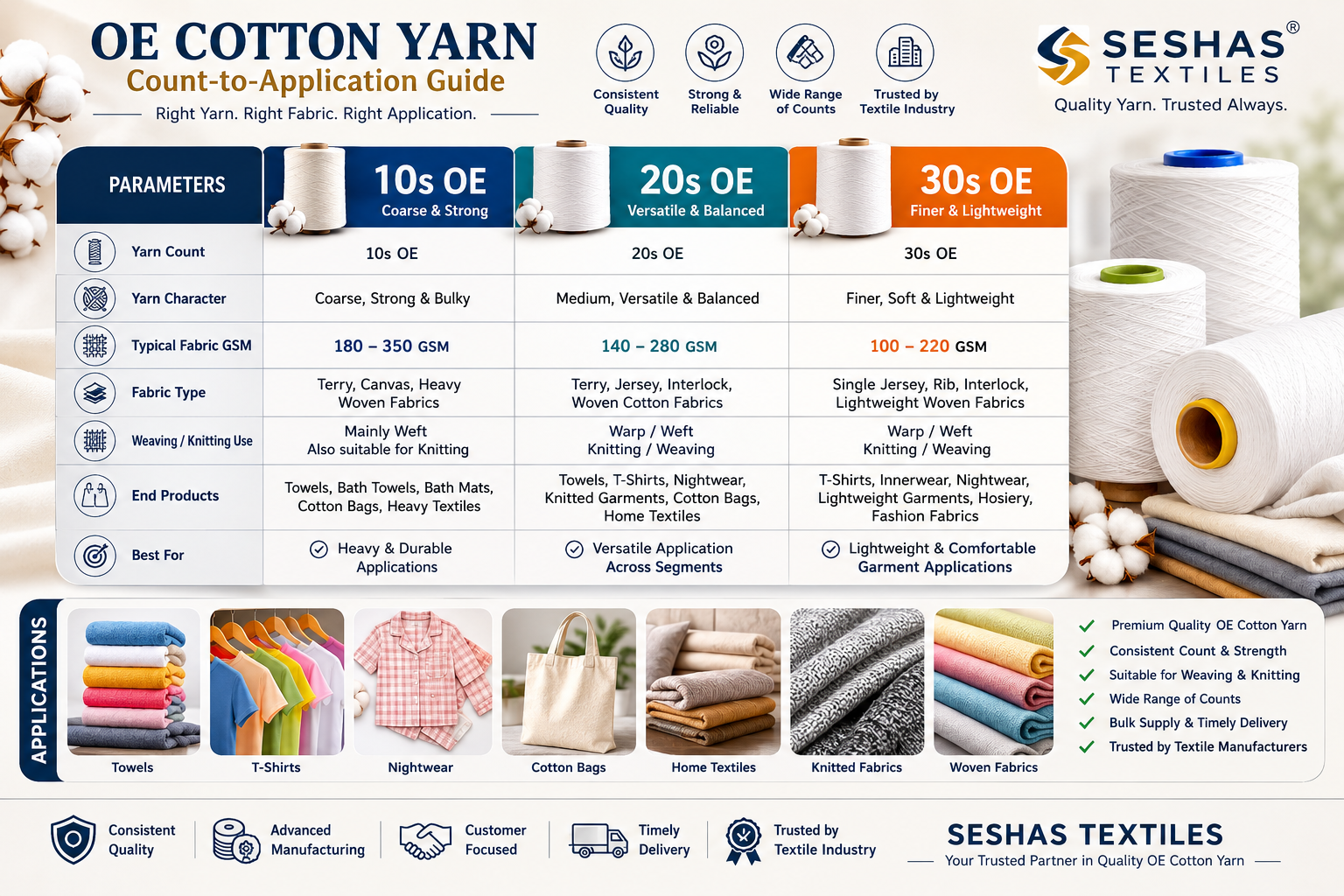
- Yarn count (10s, 20s, etc.)
- Type (OE, ring-spun, combed)
- CSP strength (900, 1100, 1200+)
- Color (grey, white, dyed)
- Finish (soft, semi-soft, hard)
Also define:
- Monthly volume
- Delivery frequency
- Lead time expectations
- Budget and payment terms
Create a Proper RFQ (Request for Quotation)
A clear RFQ ensures accurate supplier comparison.
Example:
- Quantity: 500–1000 kg/month
- Yarn: 20s OE grey, 1200+ CSP
- Delivery: Weekly
- Payment: 30-day credit preferred
- Duration: 6 months
This eliminates confusion and improves negotiation power.
Step 2: Evaluate Yarn Suppliers Properly
Choosing the right supplier is critical.
Identify Multiple Suppliers
Start with 5–10 options from:
Initial Screening
Check:
- GST registration
- Years in business (minimum 2+)
- Production capacity
- Professional communication
Detailed Evaluation
Shortlist 3–5 suppliers and assess:
Production Capability
- Capacity vs your requirement
- Ability to scale
Quality Systems
- Testing processes
- Certifications
- Availability of test reports
Reliability
- Delivery track record
- Issue resolution process
Financial Stability
- Years in operation
- Existing customer base
Reference Checks
Always contact at least 3 customers and ask:
- Delivery consistency
- Quality performance
- Pricing stability
- Overall reliability
Sample Testing
Before bulk orders:
- Request 5–10 kg sample
- Check CSP and quality
- Test on your looms
- Compare with alternatives
Step 3: Negotiate Pricing Strategically
Price negotiation should be structured, not aggressive.
Understand Market Pricing
Typical range:
- 10s OE: ₹380–420/kg
- 20s OE: ₹420–480/kg
Effective Negotiation Strategies
- Commit to volume for better pricing
- Offer long-term contracts
- Adjust payment terms for discounts
- Bundle multiple products if possible
Avoid Common Mistakes
- Unrealistic price demands
- Breaking commitments
- Constant supplier switching
- Delayed payments
Strong relationships lead to better long-term pricing.
Step 4: Build Quality Assurance into Buying
Quality should be controlled before purchase, not after problems occur.
Pre-Order
- Share detailed specifications
- Request certified samples
- Conduct trial runs
During Order
- Use written purchase orders
- Confirm specifications clearly
- Define acceptance criteria
After Delivery
- Inspect packaging and quantity
- Test samples from batch
- Verify CSP and count accuracy
- Approve before payment
Reject If:
- CSP below standard
- Count variation above limits
- Visible defects
- Missing test certificates
Step 5: Manage Inventory and Cash Flow
Efficient inventory reduces costs and improves liquidity.
Maintain Optimal Inventory
- Standard yarn: 15–30 days’ stock
- Specialty yarn: 45–60 days
Set reorder points to avoid shortages.
Optimize Working Capital
Align:
- Supplier payment terms
- Customer payment cycles
Reduce inventory holding time where possible.
Example:
Reducing 15 days of inventory can free significant working capital.
Step 6: Build Strong Supplier Relationships
Reliable suppliers are long-term assets.
Best Practices
- Communicate regularly
- Share forecasts
- Provide feedback
- Pay on time
Benefits
- Priority supply during shortages
- Better pricing
- Flexible terms
- Improved service
Maintain Backup Suppliers
Keep 1–2 alternatives for:
- Emergency supply
- Peak demand
- Price comparison
Step 7: Implementation Checklist
Before buying yarn, ensure:
Planning
- Forecast prepared
- Specifications defined
Evaluation
- Multiple suppliers compared
- Samples tested
Negotiation
- Market price understood
- Terms agreed
Order
- Trial order completed
- Quality verified
Ongoing
- Performance tracked
- Relationship maintained
Conclusion
Yarn procurement does not need to be complicated. A structured approach makes it predictable and efficient.
By planning ahead, evaluating suppliers properly, ensuring quality, and managing inventory effectively, you can significantly improve your mill’s performance.
The result is lower costs, better quality, fewer disruptions, and stronger supplier partnerships.
Contact for Yarn Supply
Seshas Textiles supplies high-quality cotton yarn with consistent performance and reliable delivery.
- Certified quality with test reports
- Competitive pricing for bulk orders
- Flexible terms for long-term customers
Phone: 9500787216
WhatsApp: +91 9363913426
Email: sales@seshasstextiles.com