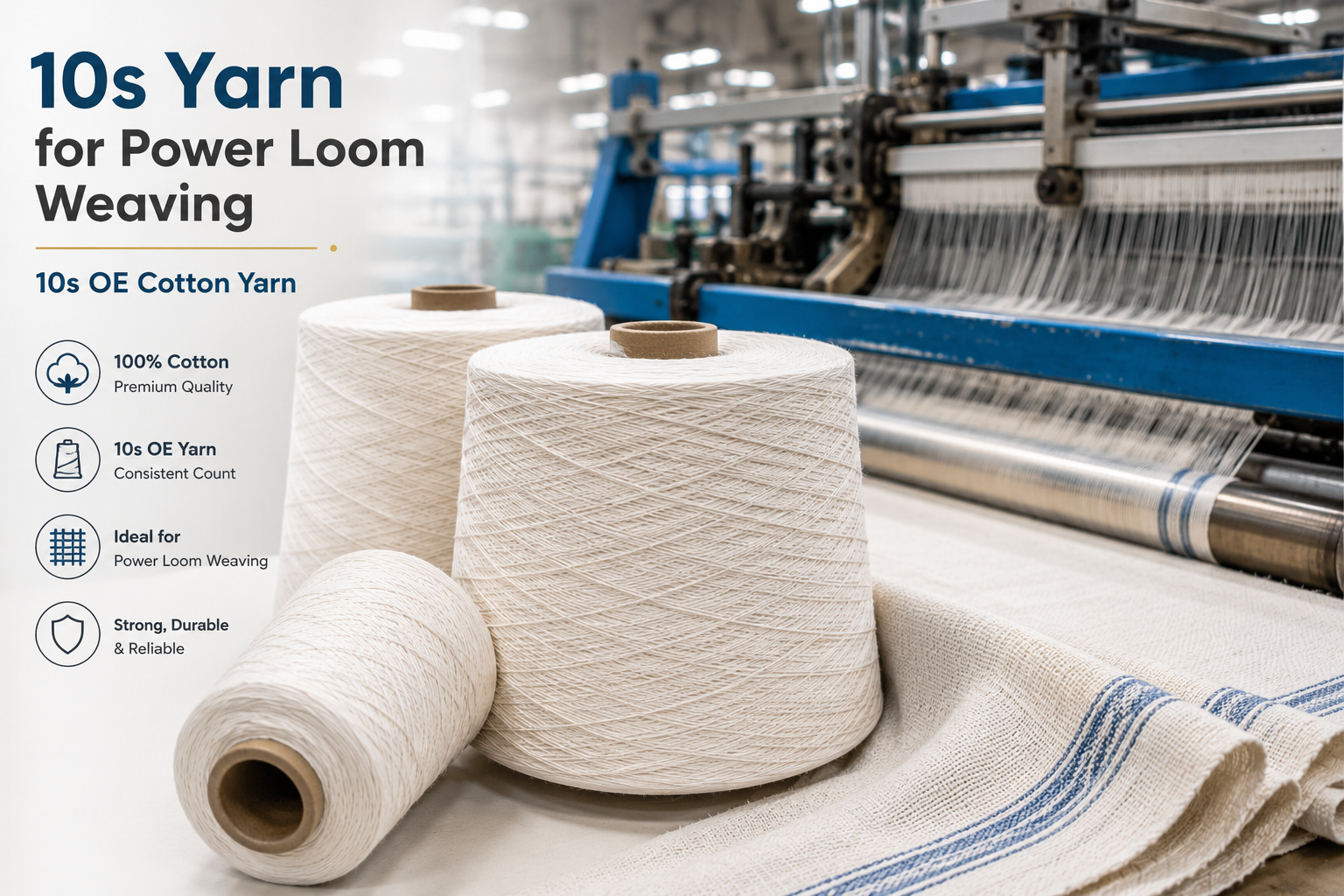
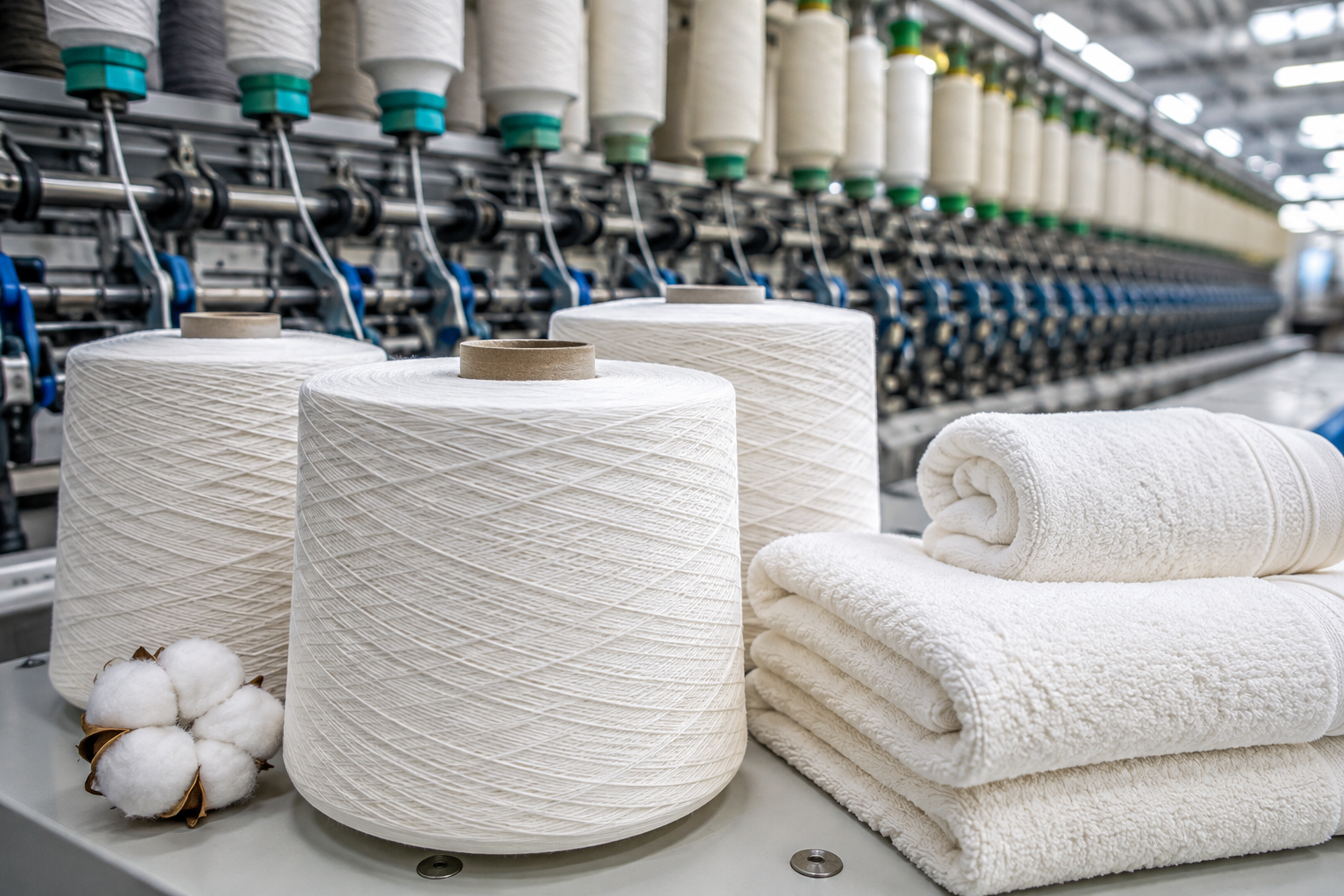
If you’ve spent even a short time in the textile industry, you’ve likely encountered this common question: “Should I use 10s or 20s OE yarn?”
At first glance, the difference seems simple. However, this decision directly impacts your fabric quality, production efficiency, pricing strategy, and overall profitability.
There is no universal answer. The right choice depends on your application, machinery, workforce, and target market.
This guide explains the technical differences, applications, and cost implications and helps you choose the right yarn for your mill.
What Does Yarn Count Mean?
Yarn count refers to the thickness of the yarn.
- A lower count (10s) means thicker yarn
- A higher count (20s) means thinner yarn
In simple terms:
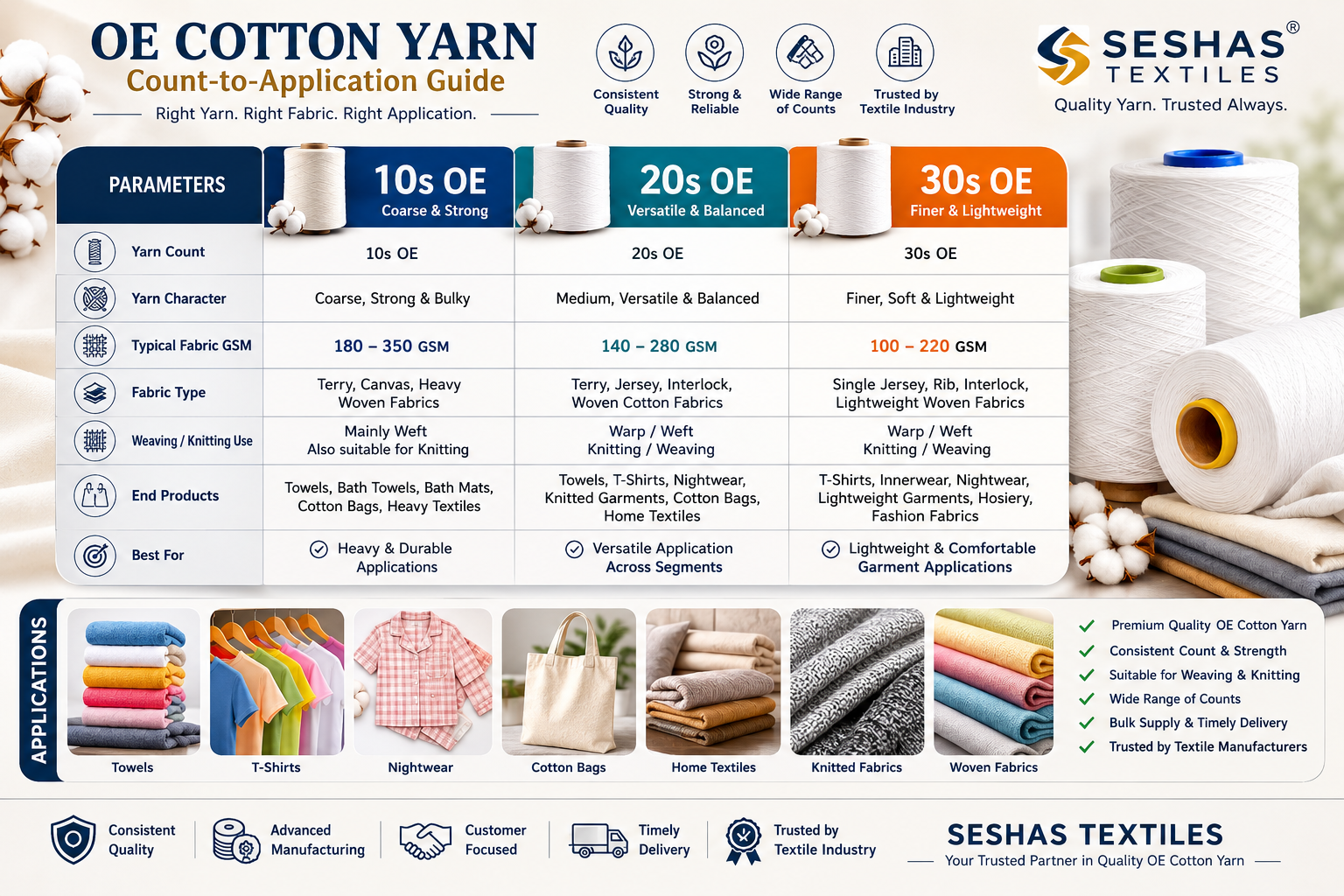
10s OE yarn is thicker and heavier, while 20s OE Yarn is finer and lighter.
This difference affects fabric strength, appearance, texture, and cost.
Strength and Durability Comparison
At the individual thread level:
- 10s yarn is stronger because it is thicker
- 20s yarn is finer and slightly weaker individually
However, fabric strength depends on overall structure.
With 20s yarn, you can achieve higher thread density, which often results in stronger and more durable fabric. A tightly woven 20s fabric can outperform a loosely woven 10s fabric.
CSP (Count Strength Product) is more important than yarn count. A high-CSP 20s yarn can be stronger than a low-CSP 10s yarn.
Applications and Use Cases
- Industrial fabrics
- Workwear and uniforms
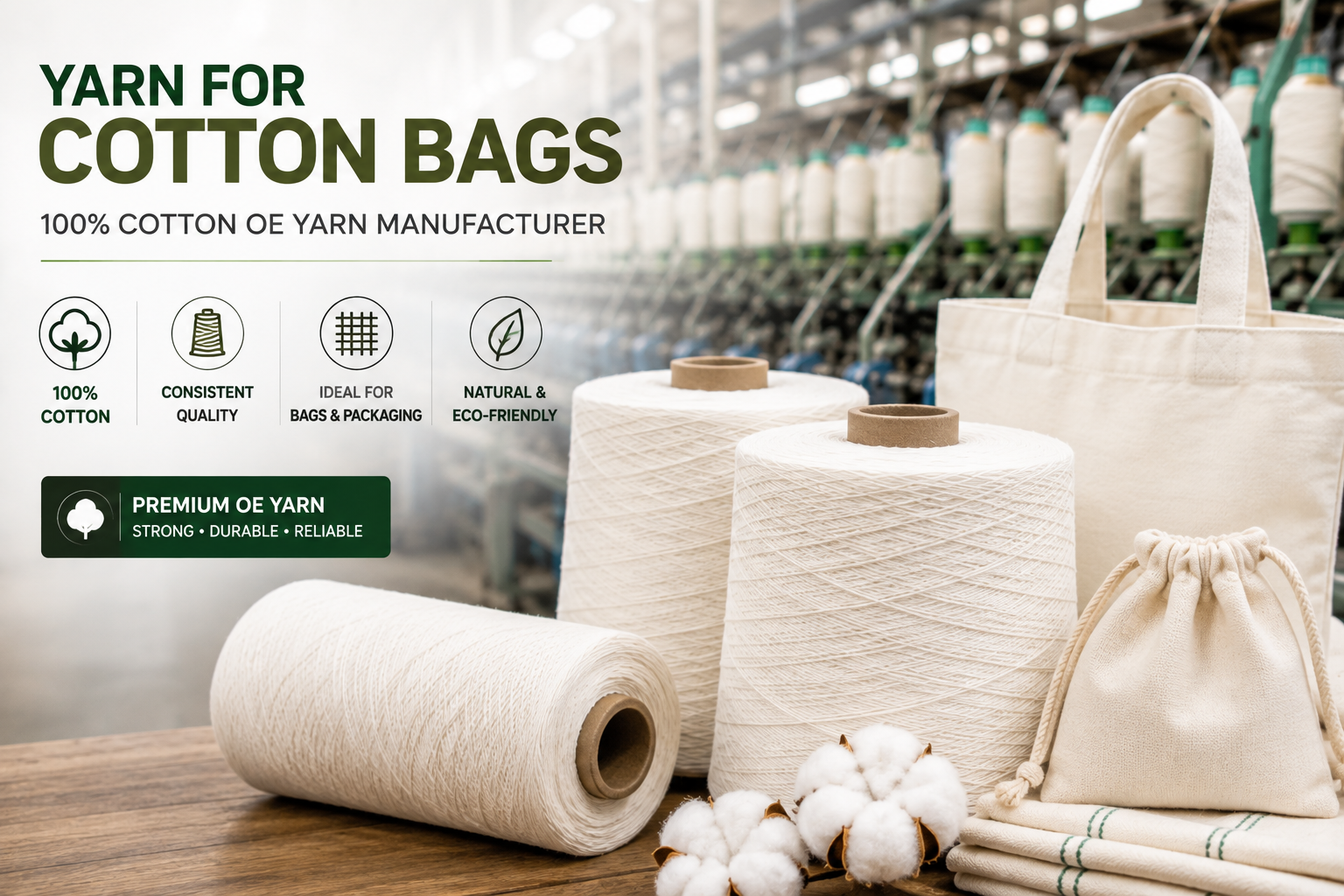
- Canvas and bags
- Bulk production for cost-sensitive markets
The thicker yarn provides durability and faster production.
- Fashion apparel
- Bed sheets and home textiles
- Premium garments
- Printed and dyed fabrics
The finer yarn offers better appearance, softness, and finish.
Hybrid Usage
Many mills use both yarns strategically:
- 10s for warp (strength)
- 20s for weft (comfort and finish)
This approach balances durability and quality.
Production Speed and Efficiency
10s Yarn:
- Supports faster weaving speeds
- Produces fewer thread breaks
- Works well on older looms
- Requires less skilled operators
20s Yarn:
- Requires better tension control
- Needs skilled operators
- Slightly slower production
- Performs best on modern machines
If your setup includes older machinery, 10s is generally more reliable.
Cost and Profitability
Approximate yarn prices:
- 10s OE Yarn: ₹380–420 per kg
- 20s OE Yarn: ₹420–480 per kg
However, 20s yarn requires less material per meter due to its finer count.
This means the total fabric cost can be similar or even lower for 20s.
Selling Price:
- 10s fabric: ₹150–200 per meter
- 20s fabric: ₹250–350 per meter
20s yarn enables premium pricing, resulting in higher profit margins.
Quality and Consistency
10s yarn is easier to produce and maintain consistency. It is more forgiving in manufacturing and less sensitive to environmental conditions.
20s yarn offers higher quality potential but requires strict quality control, better equipment, and consistent production conditions.
If supplier quality is inconsistent, 10s yarn is the safer choice.
Decision Framework
Choose 10s OE yarn if:
- You produce heavy-duty fabrics
- You prioritize production speed
- You operate older machinery
- Your market is price-sensitive
Choose 20s OE yarn if:
- You target premium markets
- You have modern looms
- You need finer fabric quality
- You want higher profit margins
Best Strategy for Textile Mills
Many successful mills use both yarn types:
- 10s for bulk and budget production
- 20s for premium product lines
This approach allows flexibility and maximizes revenue potential.
Conclusion
The choice between 10s and 20s OE yarn is not about which is better, but which is better suited to your business needs.
10s yarn offers speed, durability, and cost efficiency.
20s yarn provides better quality, appearance, and higher profitability.
Evaluate your machinery, workforce, market demand, and pricing strategy before making a decision.
Contact for Bulk Yarn Supply
Seshas Textiles’s supplies high-quality 10s and 20s OE yarn with consistent performance.
- Reliable quality with tested CSP
- Competitive pricing for bulk orders
- Fast delivery across India
Phone: 9500787216
WhatsApp: +91 9363913426
Email: sales@seshasstextiles.com