
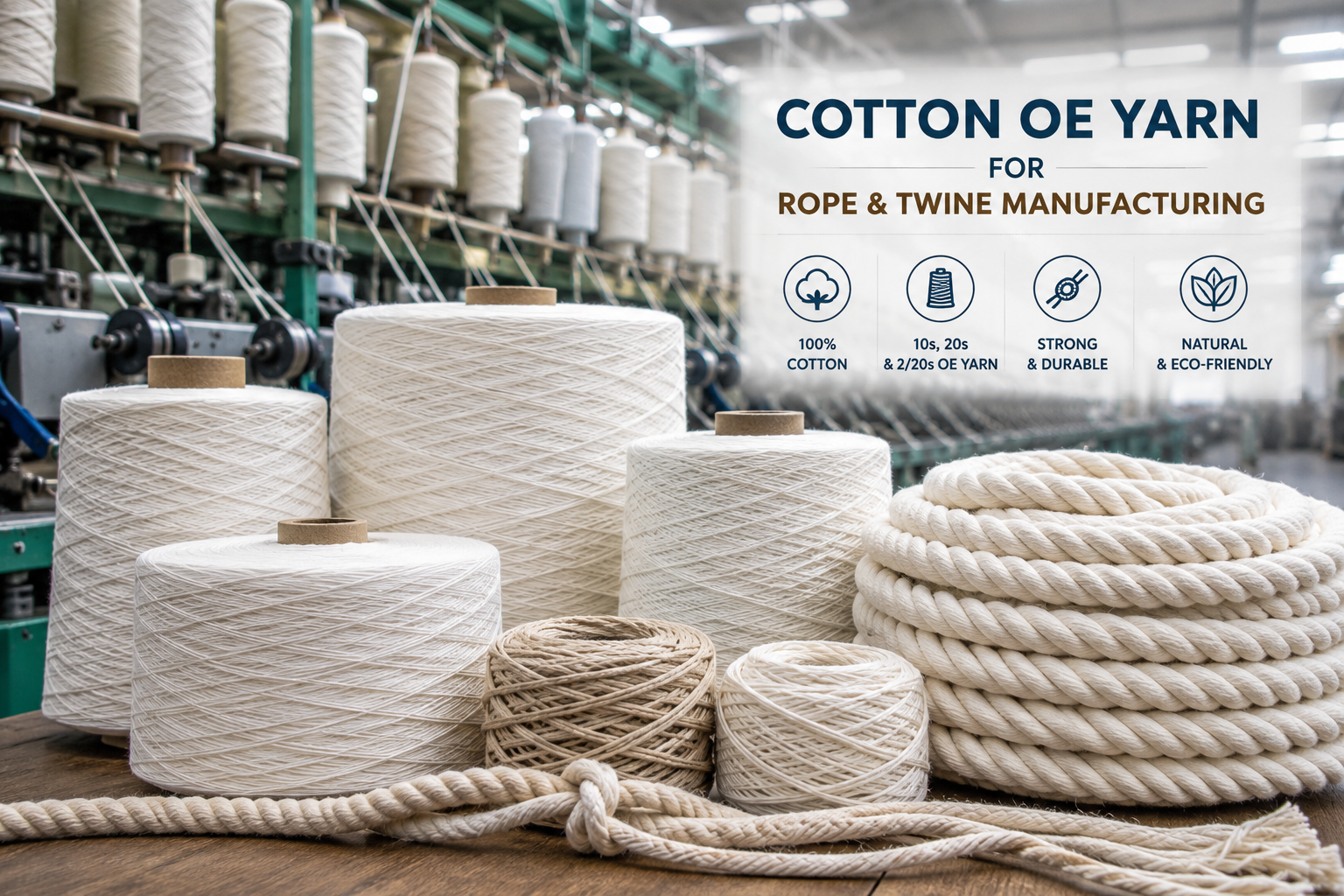
Rope and twine are used across a wide range of applications, from packaging and agriculture to textiles, crafts, and general-purpose products. Although the final strength and performance depend on how the rope or twine is constructed, the process begins with the right yarn.
For manufacturers, choosing suitable yarn for rope and twine manufacturing can make a difference to production efficiency, consistency, and the quality of the finished product.
Cotton OE yarn can be a practical choice for applications that require a natural fibre and a suitable combination of yarn strength, flexibility, and handling properties.
Rope and twine are produced by twisting, combining, or braiding strands of yarn. This means the characteristics of the original yarn become part of the finished product.
A suitable yarn can support:
Consistent rope thickness
Stable twisting performance
Uniform product construction
Smooth machine processing
Reliable production quality
Consistent appearance
The right specification will depend on the type of rope or twine, its intended application, and the machinery used during production.
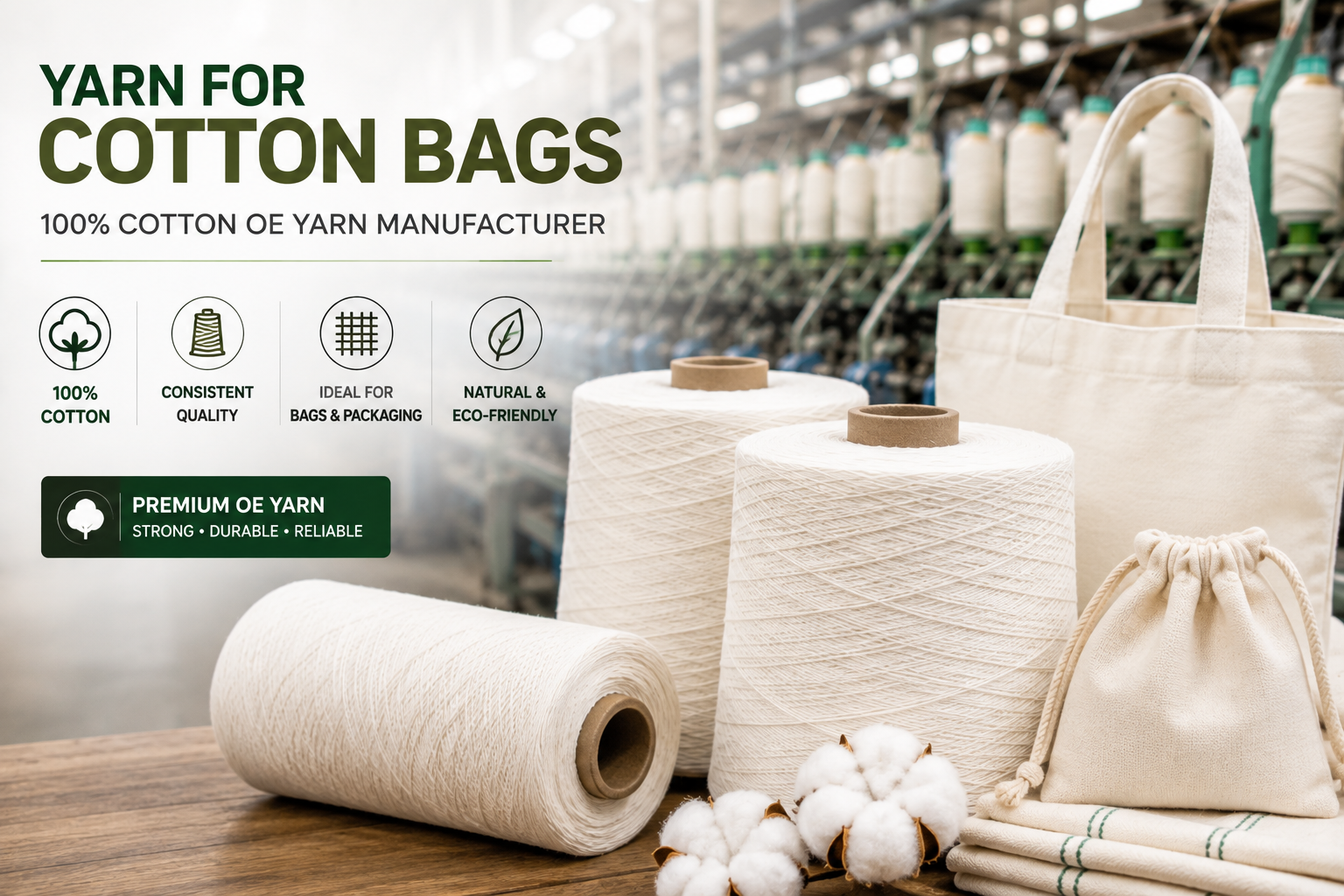
Cotton is a natural textile fibre with a long history of use in cordage and textile-related products.
For manufacturers looking for natural-fibre rope or twine, cotton yarn can be considered for applications where a soft, flexible, and traditional material is preferred.
Cotton yarn can be used in products such as:
Packaging twine
Utility twine
Decorative rope
Craft rope
Textile cordage
Selected agricultural applications
General-purpose tying products
The required yarn specification should be determined according to the finished product rather than choosing a yarn solely based on fibre type.
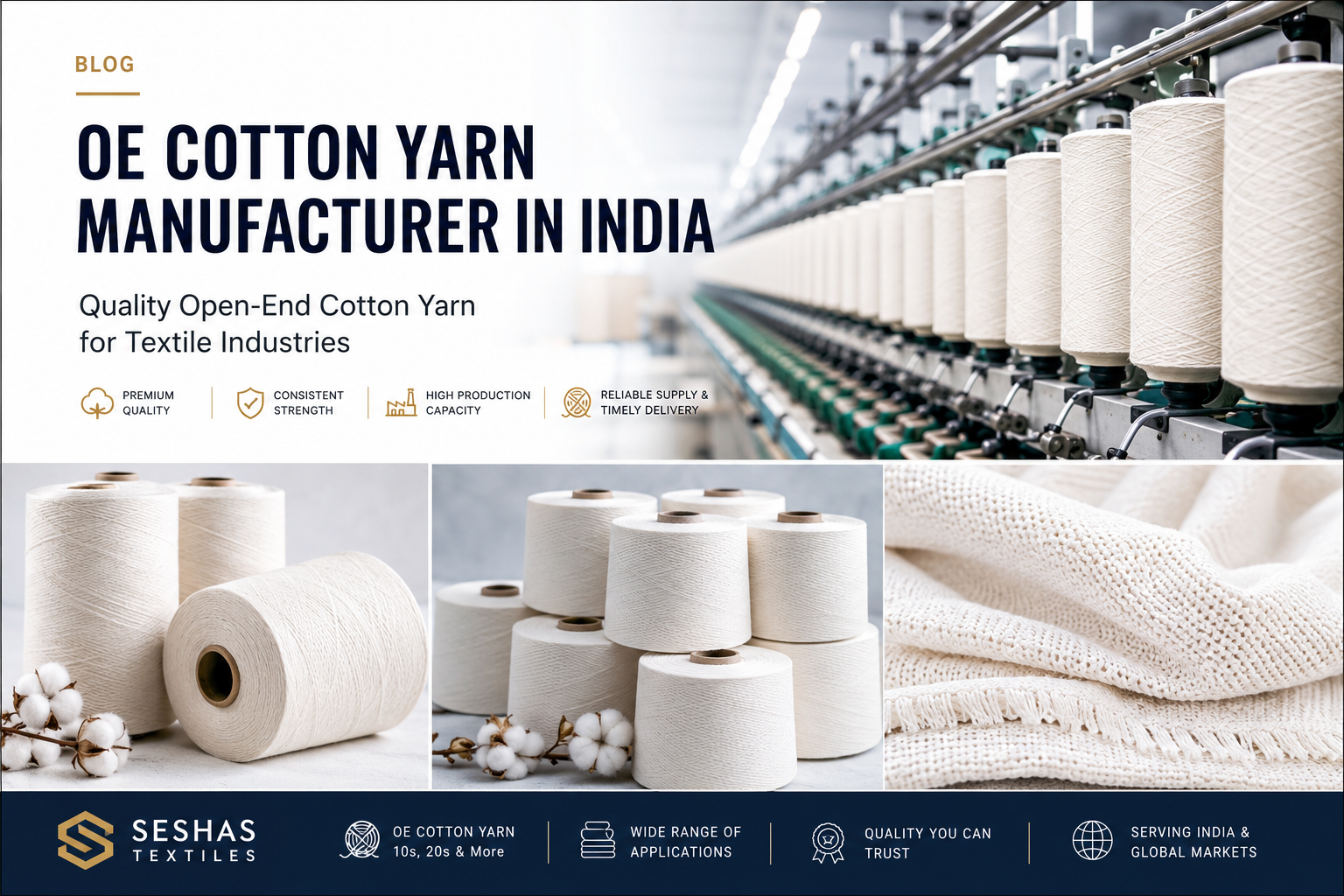
OE stands for Open-End, which refers to the spinning method used to manufacture the yarn.
Open-End spinning is commonly used for producing cotton yarns in different counts. It can be particularly useful for applications that require commercially practical coarse-count yarn.
For rope and twine production, OE cotton yarn may be selected based on factors such as yarn count, strength, twist, package format, and the requirements of the rope-making process.
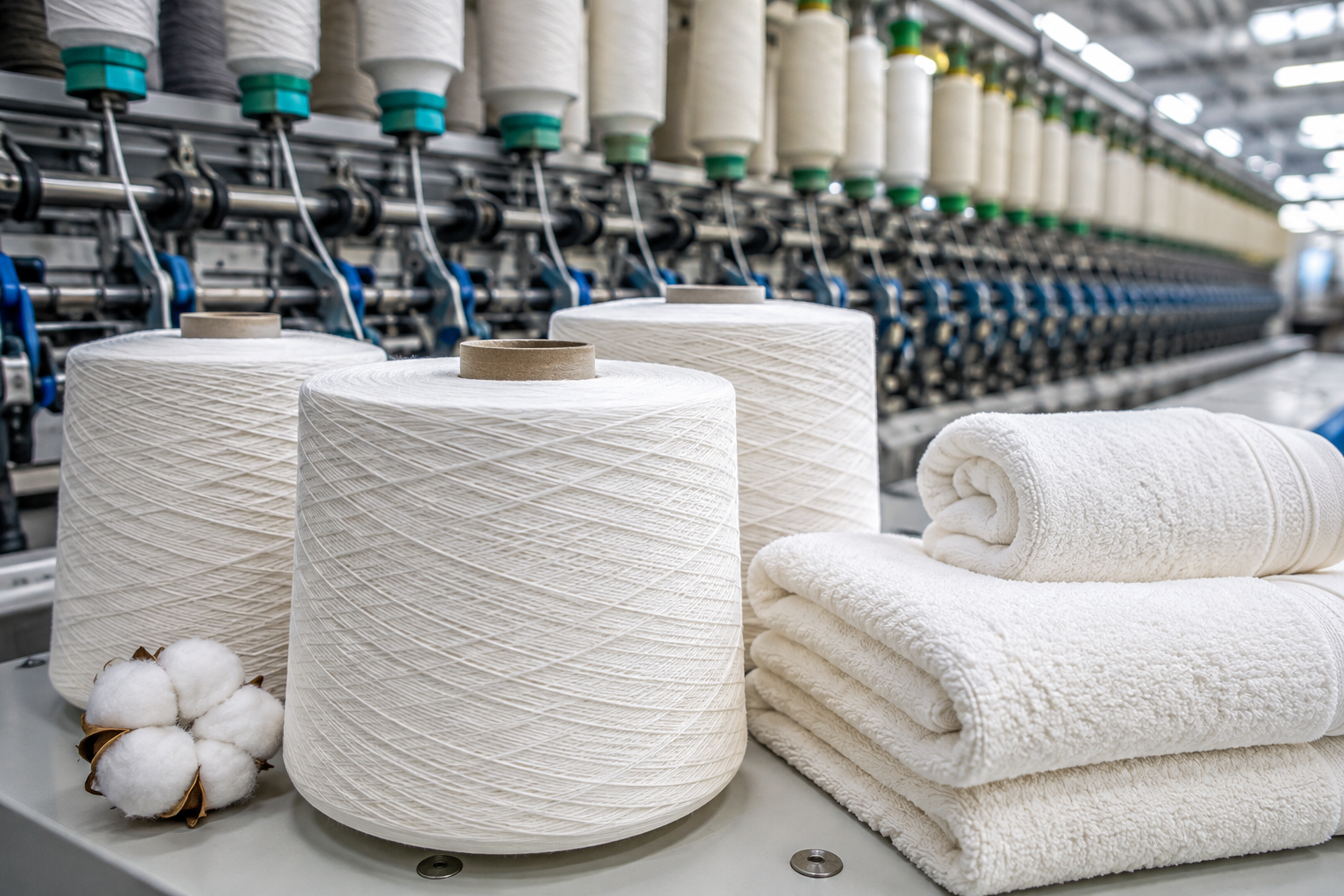
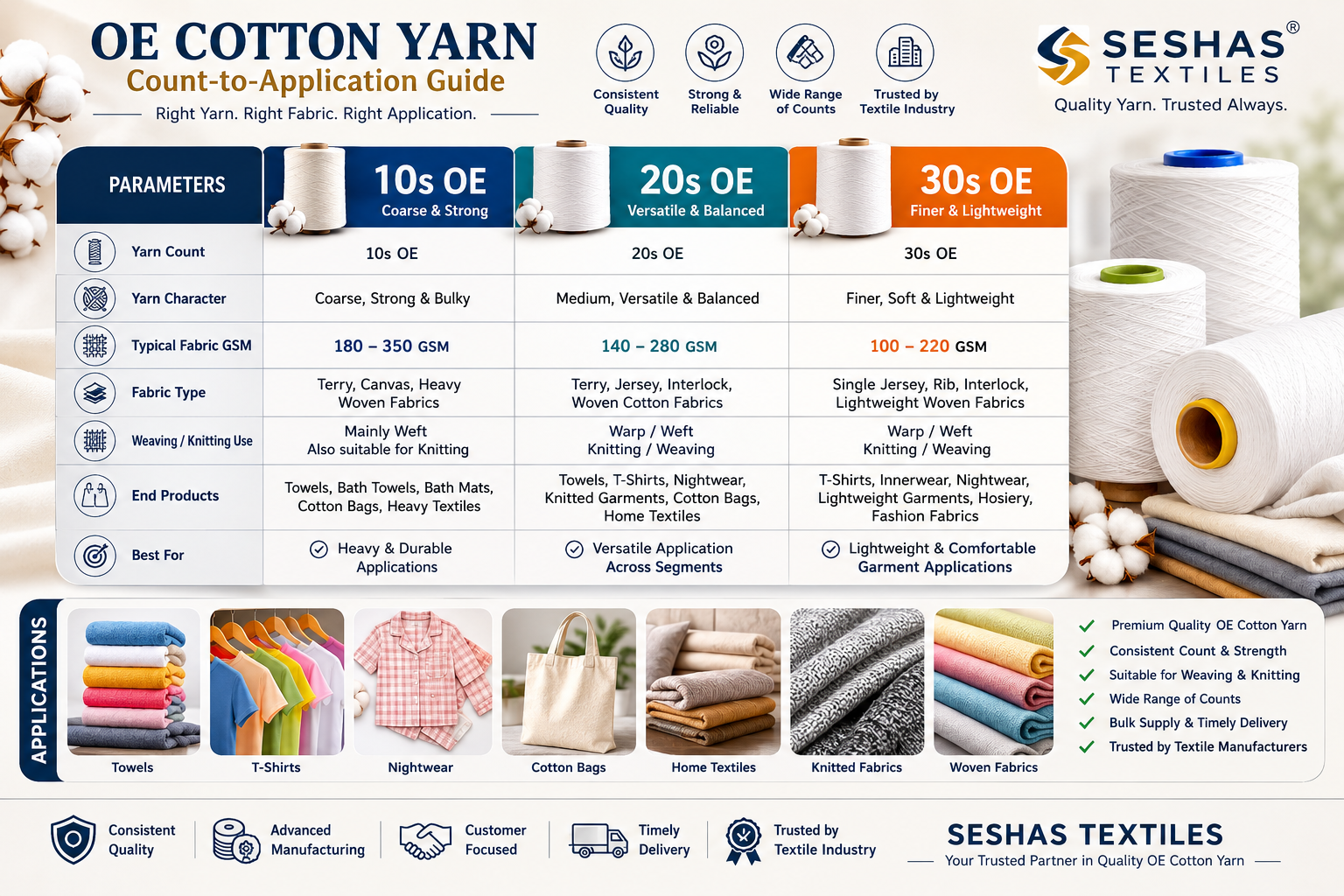
Seshas’s Textiles manufactures 100% cotton OE yarn Yarn for Towel Manufacturing | 100% Cotton OE Yarnin counts including 10s, 20s, and 2/20s for textile and industrial applications.
There is no single yarn count that works for every rope or twine product.
The appropriate count depends on the required diameter, construction, strength, number of strands, and production method.
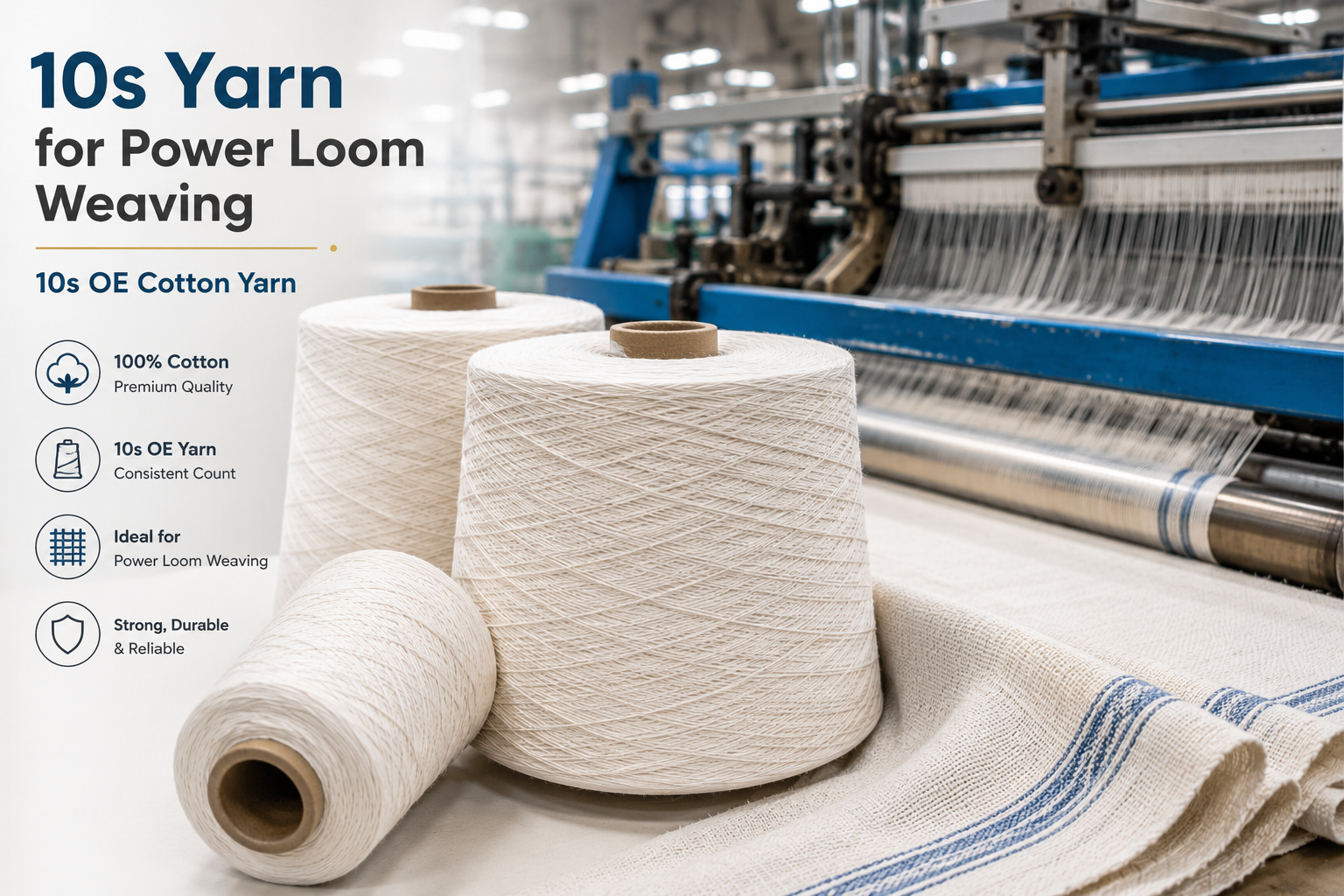
10s is a comparatively coarse yarn count and can be suitable when a thicker yarn is required for the intended product construction.
Seshas’s Textiles supplies 10s OE cotton yarn made from 100% cotton for industrial applications, including rope and twine manufacturing.
According to the company’s published product information, its 10s OE yarn has a stated strength specification of 1200+ CSP.
20s cotton yarn is finer than 10s yarn.
It can be considered for rope and twine products where the manufacturing process calls for a finer yarn or a different strand arrangement.
The correct choice depends on the required finished-product characteristics.
Some manufacturing processes require yarn with a doubled construction.
2/20s OE cotton yarn consists of two 20s yarn strands combined into one yarn structure. This type of yarn can be considered when the production process requires a specific ply or construction.
Before selecting a doubled yarn, manufacturers should check compatibility with their rope-making machinery and product design.
Yarn count is important, but it is only one part of the selection process.
The yarn should have strength characteristics suitable for the intended rope or twine application.
If the finished product will experience tension or pulling forces, the yarn specification should be selected accordingly.
Consistent yarn count helps manufacturers maintain a more uniform product during twisting and other production stages.
Variation between batches can affect the final appearance and construction.
Twist affects how yarn behaves during processing.
Consistent twist can help maintain predictable performance when individual yarns are combined to create rope or twine.
The cleanliness of the yarn is another important consideration.
Properly processed yarn with controlled contamination can help support cleaner production and reduce unwanted material-related issues.
The yarn package should be suitable for the equipment being used.
A well-formed package can allow consistent unwinding and help reduce avoidable interruptions during manufacturing.
The application determines the yarn specification.
Cotton yarn can be considered for a variety of rope and twine products, including:
Packaging products: Cotton twine can be used for selected bundling and packaging requirements.
Craft products: Natural cotton yarn can be suitable for decorative and handmade rope products.
Textile applications: Cotton cordage can be used in selected textile and fabric-related products.
Agricultural uses: Certain light-duty tying applications may use cotton-based twine.
Utility products: Cotton rope and twine can be manufactured for a range of general-purpose applications.
Not every cotton yarn is suitable for every end use, so manufacturers should match the yarn specification to the required product performance.
Before ordering yarn in bulk, manufacturers should establish their production requirements.
Here are some important points to evaluate:
Know the required diameter, thickness, number of strands, and construction of the rope or twine.
Choose a yarn count that works with the desired product construction and machinery.
Consider how much tension the finished rope or twine will experience during use.
Single, doubled, twisted, or braided constructions may require different yarn specifications.
The yarn package and unwinding characteristics should be appropriate for the equipment used in production.
For regular production, consistent availability is important. A supplier should be able to support the required quantity without significant variation in specifications.
Seshas’s Textiles is a cotton OE yarn manufacturer located in Rajapalayam, Tamil Nadu.
The company supplies 100% cotton OE yarn for a variety of textile and industrial requirements. Its product range includes 10s, 20s, and 2/20s OE cotton yarn.
The yarn is supplied for applications that include:
Rope and twine manufacturing
Power loom weaving
Handloom weaving
Towel manufacturing
Doubling
Reeling
Other textile applications
For manufacturers, having access to different yarn counts can make it easier to select a specification suited to a particular production requirement.
Rope and twine production often involves repeated and continuous manufacturing. Changes in raw-material quality can affect production consistency.
A reliable supplier can help manufacturers maintain a steady supply of yarn with clearly defined specifications.
When evaluating a supplier, consider:
Product consistency
Yarn specifications
Bulk-order capability
Packaging options
Delivery reliability
Communication and support
These factors become increasingly important when yarn is purchased regularly for commercial production.
The quality of the yarn used at the beginning of rope and twine production can influence the consistency of the finished product.
When selecting yarn for rope and twine manufacturing, manufacturers should consider more than yarn count. Fibre composition, strength, twist, count consistency, package quality, machinery, and end-use requirements all need to be considered together.
For applications where cotton is appropriate, 100% cotton OE yarn can provide a practical option for producing different types of rope and twine.
Seshas’s Textiles supplies cotton OE yarn in multiple counts for textile and industrial applications, giving manufacturers options based on their production requirements.
If you are sourcing yarn for commercial rope or twine production, discuss your required yarn count, quantity, application, packaging, and specifications with Seshas’s Textiles.
Choosing the right yarn at the beginning can help manufacturers build a more consistent and efficient production process.