
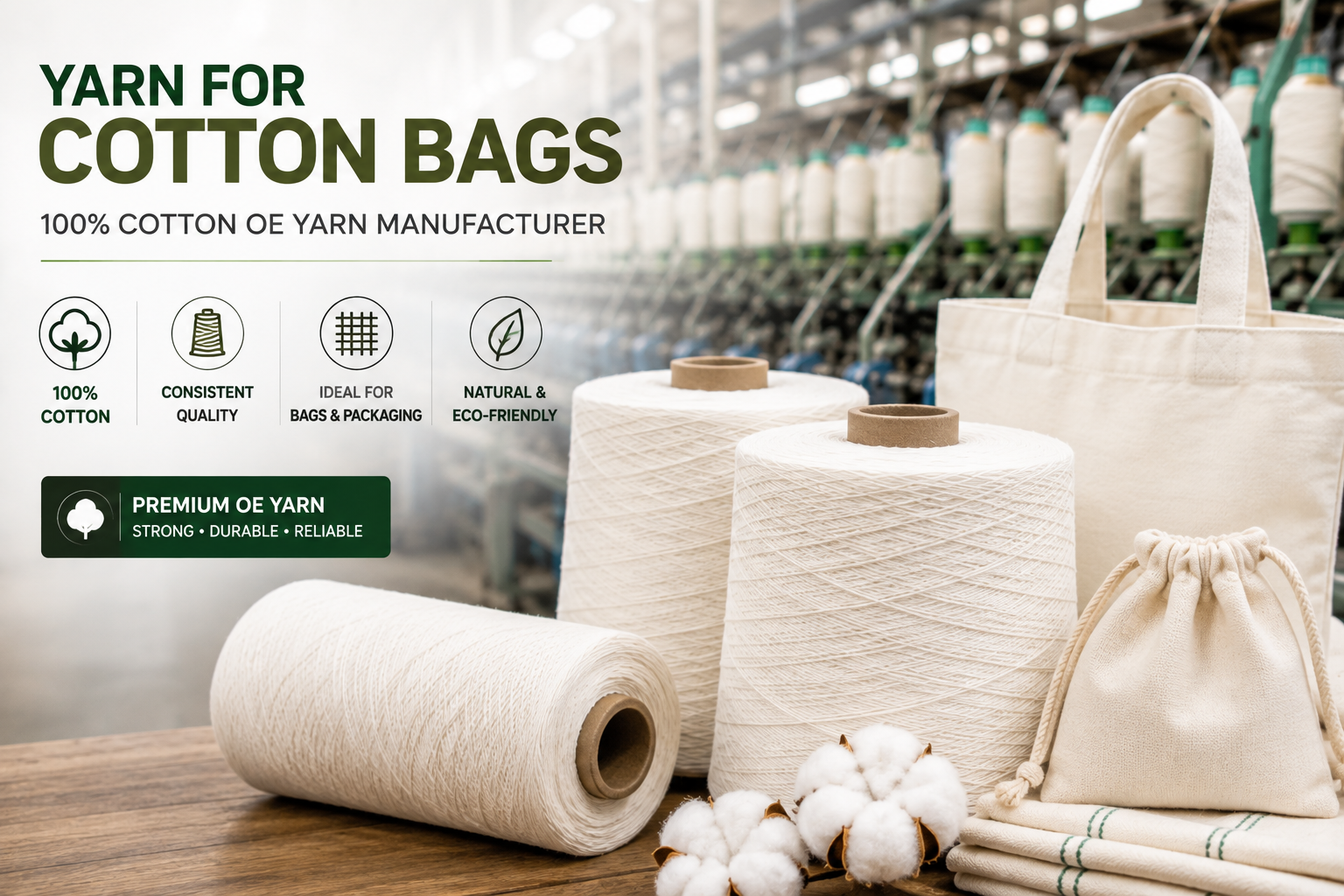
Cotton bags have become a popular choice for shopping, packaging, promotional campaigns, and everyday use. They offer a practical alternative to many disposable packaging options and can be designed in different sizes, colours, and fabric weights.
Behind every well-made cotton bag is a suitable fabric, and behind that fabric is the right yarn.
Choosing the right yarn for cotton bags can influence fabric strength, appearance, durability, and weaving performance. For manufacturers, selecting a consistent cotton yarn is an important step towards producing reliable and good-quality bags.
Cotton bags need fabric that can handle regular use. Depending on the application, the bag may carry groceries, clothing, promotional materials, books, or other products.
The yarn used to produce the fabric can affect the overall characteristics of the bag.
A suitable yarn can help manufacturers achieve:
Strong and stable fabric
Consistent fabric construction
Good weaving performance
Suitable thickness and weight
Clean surface appearance
Better durability
Reliable production quality
The ideal yarn depends on the type of cotton bag, fabric construction, and intended load.
Cotton is a natural fibre that is widely used in textile manufacturing.
For cotton bag production, it can provide a combination of strength, flexibility, and a natural appearance. Cotton fabric can also be processed into different constructions depending on the required bag design.
Cotton yarn can be used to manufacture fabrics for:
Shopping bags
Tote bags
Grocery bags
Promotional bags
Drawstring bags
Gift bags
Packaging bags
Utility bags
The yarn specification should be selected according to the finished fabric and the purpose of the bag.
Different yarn counts and constructions can be used for cotton bag fabrics.
The appropriate choice depends on factors such as fabric weight, weave structure, bag size, required strength, and manufacturing equipment.
OE cotton yarn, or Open-End cotton yarn, can be considered for suitable cotton bag fabric applications where a commercially practical yarn is required.
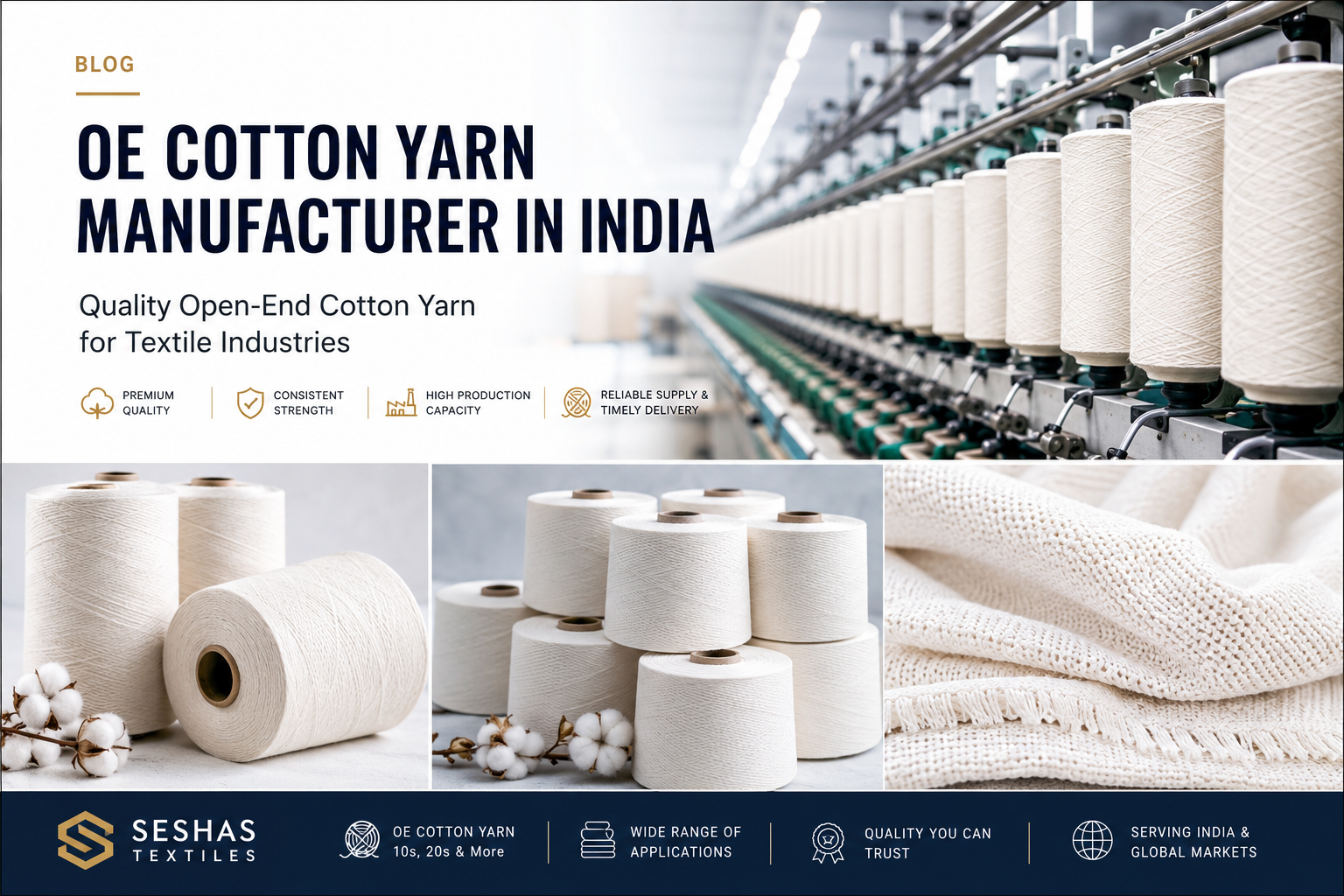
Seshas’s Textiles manufactures 100% cotton OE yarn in different counts for textile and industrial applications.
Yarn count is an important specification when developing fabric for cotton bags.
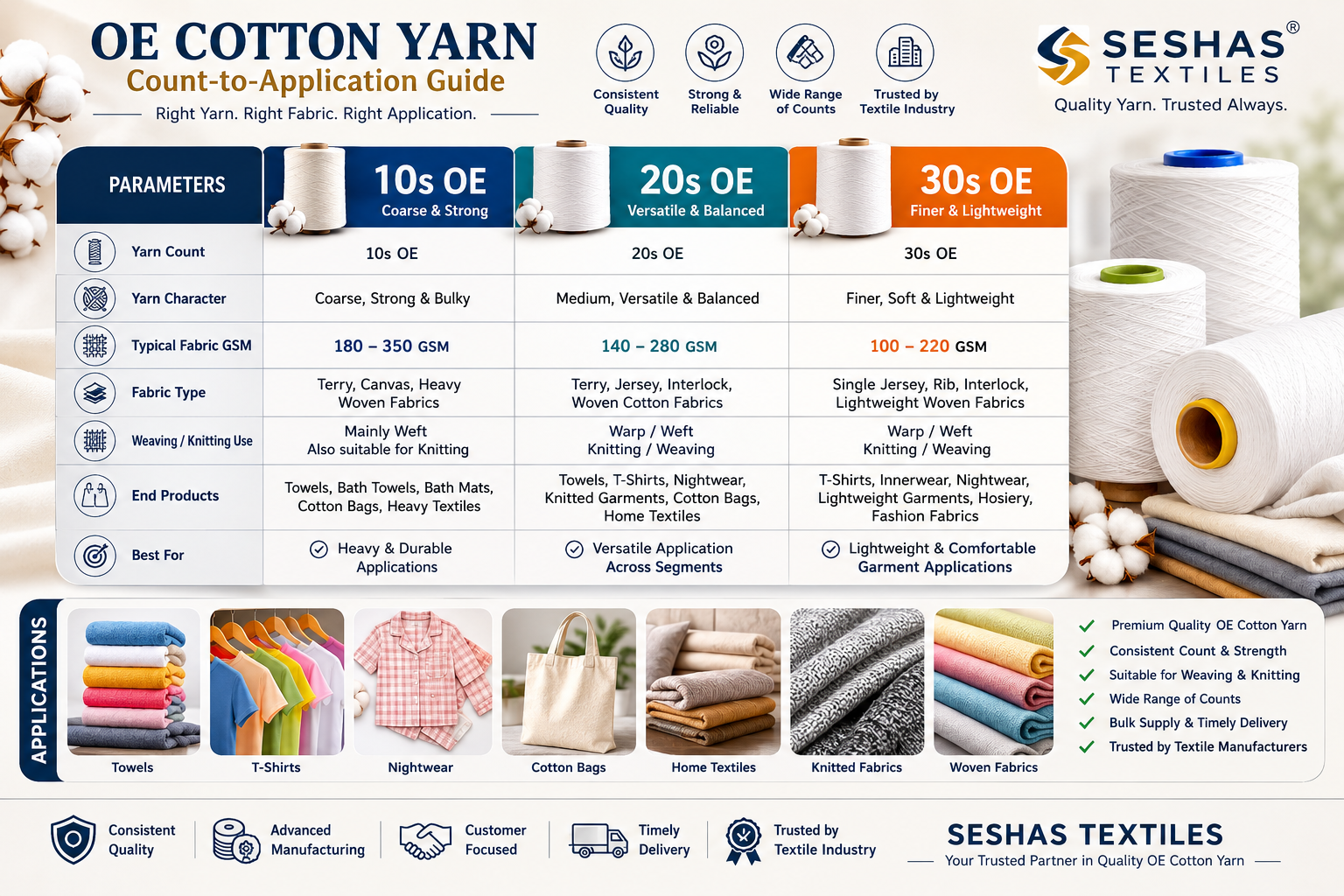
A coarser yarn can help create a heavier fabric, while finer yarns can be used where a lighter fabric construction is required.
The final selection should always be based on the required fabric specifications.
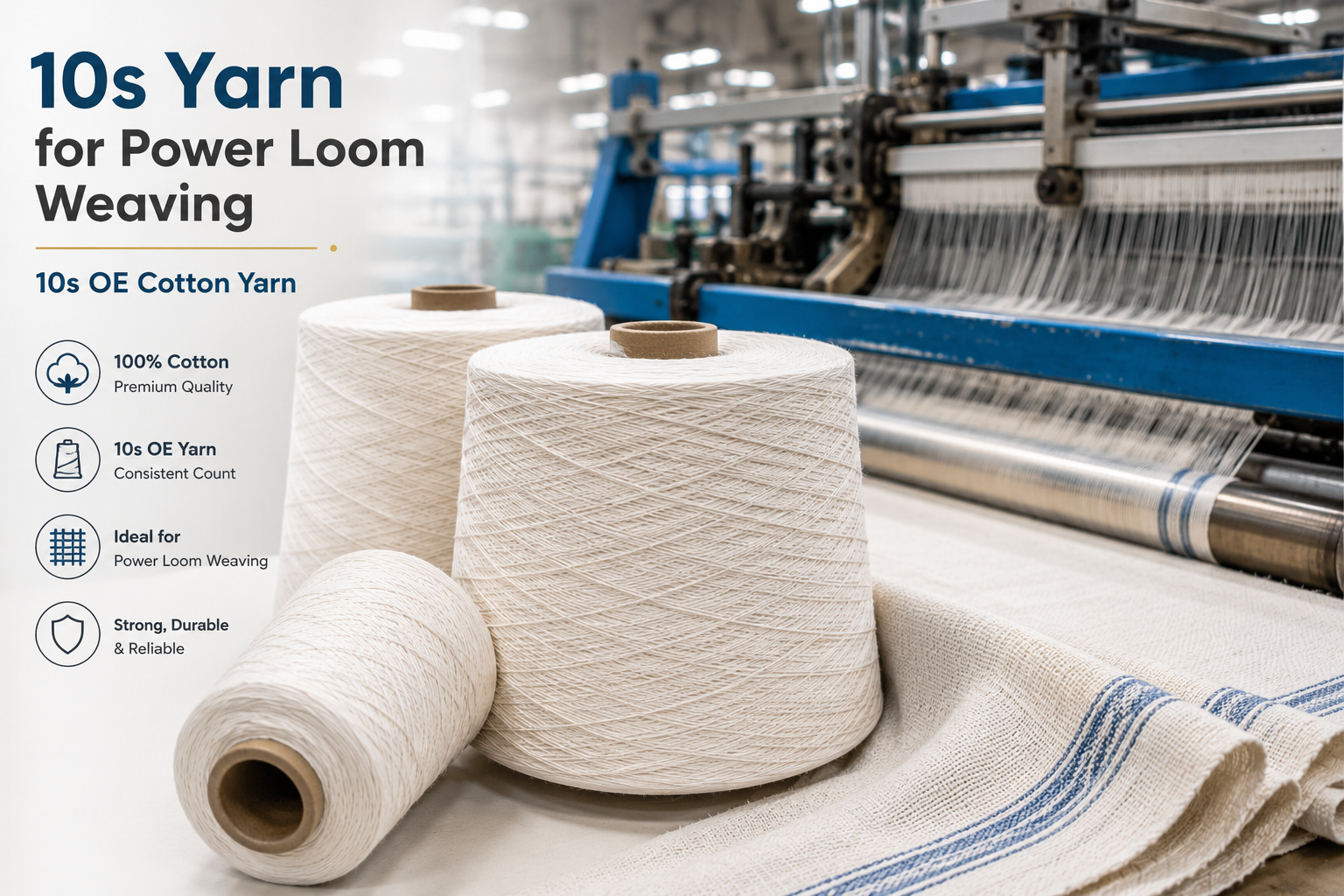
10s is a coarse cotton yarn count.
It can be considered for heavier fabric constructions where a thicker yarn is required. Depending on the weaving process and fabric design, 10s OE yarn can be suitable for certain cotton bag applications.
Seshas’s Textiles manufactures 10s OE cotton yarn from 100% cotton for various industrial and textile applications.
20s cotton yarn is finer than 10s yarn.
It can be considered for bag fabrics where the manufacturer requires a comparatively lighter yarn and a different fabric construction.
The appropriate choice will depend on the required GSM, weave, strength, and final bag design.
Some fabric constructions require doubled yarn.
2/20s OE cotton yarn combines two strands and can be considered for applications requiring a specific yarn structure.
Whether single or doubled yarn is suitable depends on the fabric construction and weaving requirements.
Choosing yarn for cotton bags involves more than selecting a count.
Manufacturers should consider several factors before purchasing.
Bag fabric needs to withstand handling and, in many cases, the weight of the products placed inside it.
Yarn with suitable strength can contribute to the durability of the finished fabric.
Consistent yarn count helps maintain uniform fabric construction.
This is especially important for manufacturers producing large quantities of bags with the same specifications.
Consistent twist can help the yarn perform more predictably during weaving.
It can also contribute to a more uniform fabric appearance.
Clean and properly processed yarn can help reduce unwanted defects during weaving and fabric production.
This can be particularly useful when the finished cotton bag requires a clean and consistent appearance.
Good yarn winding helps the yarn unwind smoothly during weaving.
This can support continuous production and reduce avoidable interruptions.
The relationship between yarn and fabric is important.
A heavier yarn can contribute to a thicker fabric, while a finer yarn can be used for lighter constructions. However, fabric weight does not depend on yarn count alone.
The final result is influenced by:
Yarn count
Warp and weft selection
Ends per inch
Picks per inch
Weave structure
Yarn strength
Finishing process
Therefore, manufacturers should select yarn based on the complete fabric specification rather than relying on yarn count alone.
Cotton bag fabrics can be developed for a wide range of uses.
Cotton shopping bags can be designed for repeated use and can be produced in different fabric weights.
Tote bags are commonly made from woven cotton fabrics and can be produced in various sizes and designs.
Businesses often use cotton bags for promotional purposes. The fabric can be printed or decorated with branding and artwork.
Cotton fabric can also be used for selected packaging applications where a reusable textile bag is preferred.
Different cotton fabric constructions can be used for everyday storage and utility products.
Before ordering yarn, manufacturers should identify the requirements of the finished product.
Determine the size, expected load, handle construction, and intended use.
The required GSM can help guide the choice of yarn count and fabric construction.
Select a count that works with the required weave and fabric specifications.
Make sure the yarn is appropriate for the expected manufacturing and end-use conditions.
The yarn should be compatible with the loom and the selected weaving method.
For large-scale production, consistent supply is essential. Manufacturers should work with suppliers who can maintain product specifications across repeat orders.
Seshas’s Textiles is an OE cotton yarn manufacturer based in Rajapalayam, Tamil Nadu.
The company manufactures 100% cotton OE yarn in different counts for textile and industrial applications.
Its product range includes:
10s OE Cotton Yarn
20s OE Cotton Yarn
2/20s OE Cotton Yarn
These yarns are supplied for applications including weaving, towels, rope and twine, doubling, reeling, and other textile requirements.
For cotton bag manufacturers, the suitable yarn count can be selected according to the required fabric construction and production process.
Cotton bag manufacturing often involves repeated production of the same fabric specifications.
If yarn quality varies significantly between batches, manufacturers may experience differences in fabric appearance or production performance.
A dependable yarn supplier can help manufacturers maintain:
Consistent yarn specifications
Stable production planning
Reliable bulk availability
Uniform fabric quality
Better order management
This makes supplier selection an important part of long-term textile production.
The quality of yarn used in cotton bag fabric can influence the strength, appearance, and consistency of the finished product.
When selecting yarn for cotton bags, manufacturers should consider yarn count, strength, twist, fabric construction, weaving requirements, and the intended use of the bag.
For suitable applications, 100% cotton OE yarn can provide a practical raw-material option for producing woven cotton bag fabrics.
Seshas’s Textiles supplies cotton OE yarn in multiple counts for textile and industrial applications, helping manufacturers choose yarn according to their production requirements.
If you are sourcing yarn for cotton bag production, discuss your required count, quantity, fabric specification, packaging, and application with Seshas’s Textiles.
The right yarn is the first step towards producing consistent, durable, and reliable cotton bag fabric.