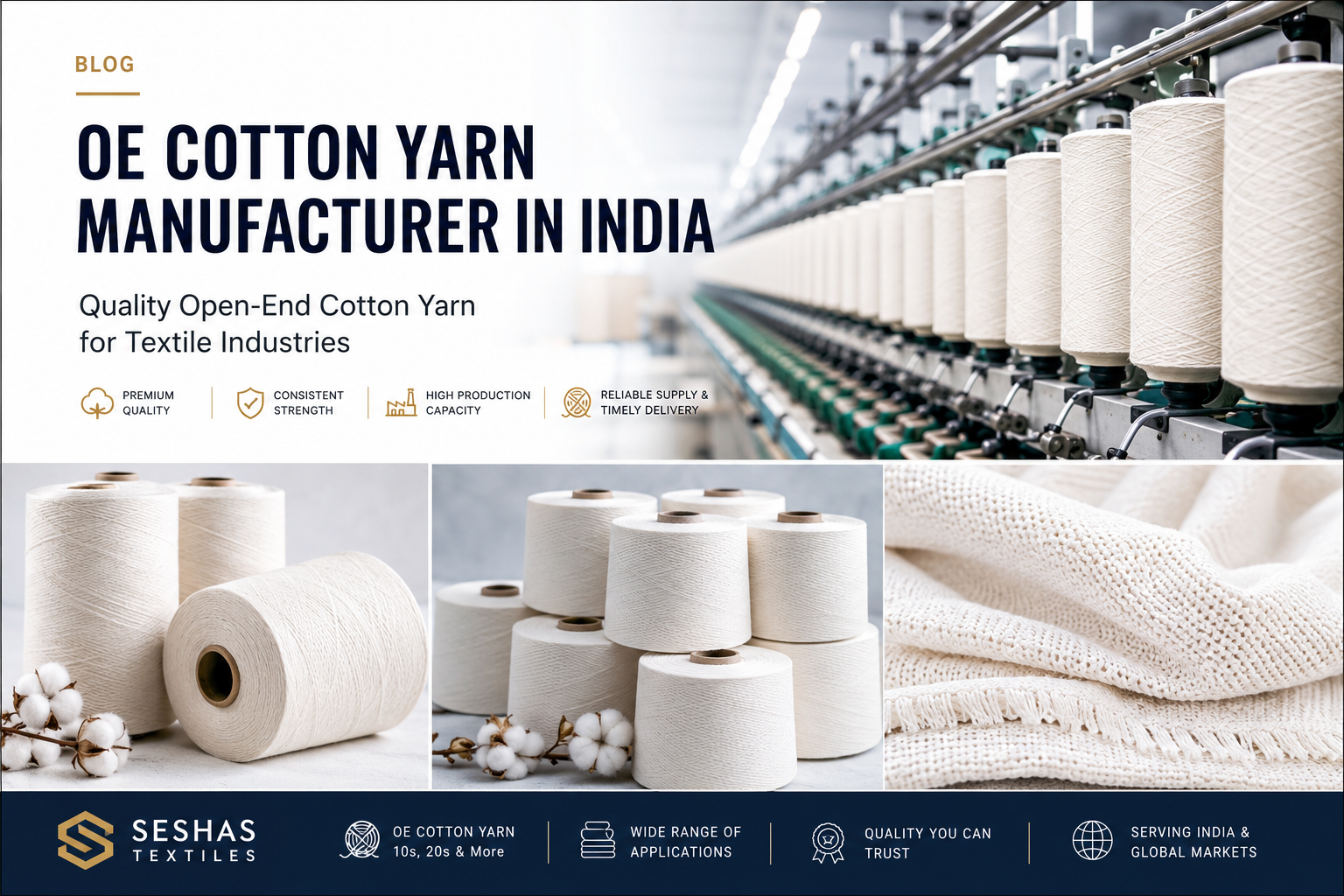

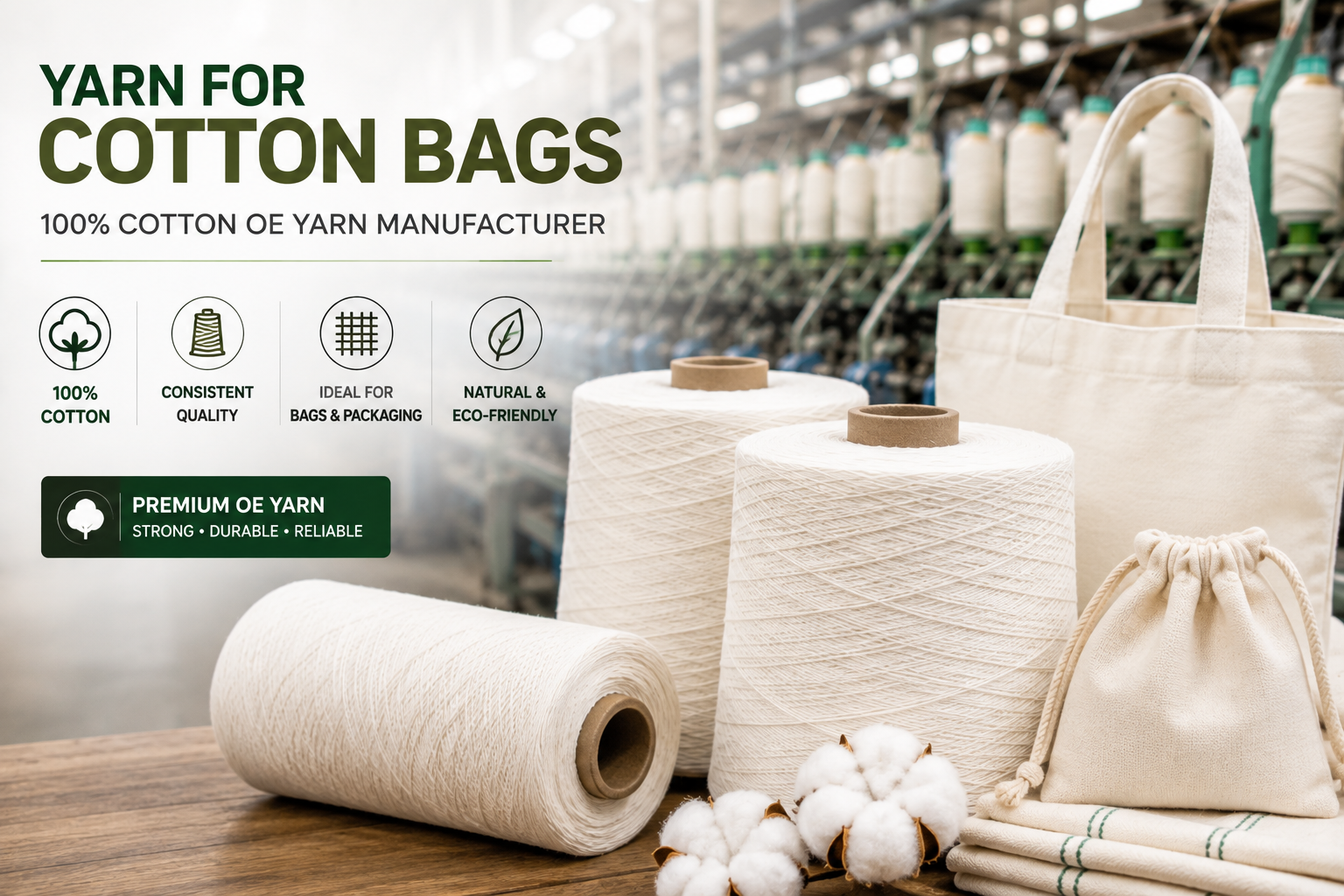
Cotton remains one of the most widely used natural fibres in the textile industry because of its comfort, breathability, durability and versatility. From garments and towels to cotton bags and home textiles, cotton fabrics are used across a wide range of applications.
Choosing the right cotton fabric manufacturers is important for businesses that require consistent quality, reliable production capacity, suitable fabric specifications and timely supply.
A professional cotton fabric manufacturer can provide fabrics according to the requirements of garment manufacturers, textile traders, wholesalers, exporters and other industrial buyers.
Cotton fabric manufacturers are textile companies involved in converting cotton yarn into finished woven or knitted fabrics.
The manufacturing process generally includes:
Depending on the manufacturing setup, a company may specialize in grey fabrics, finished fabrics, dyed fabrics, printed fabrics or customized textile materials.
A suitable yarn can help manufacturers achieve:
Strong and stable fabric
Consistent fabric construction
Good weaving performance
Suitable thickness and weight
Clean surface appearance
Better durability
Reliable production quality
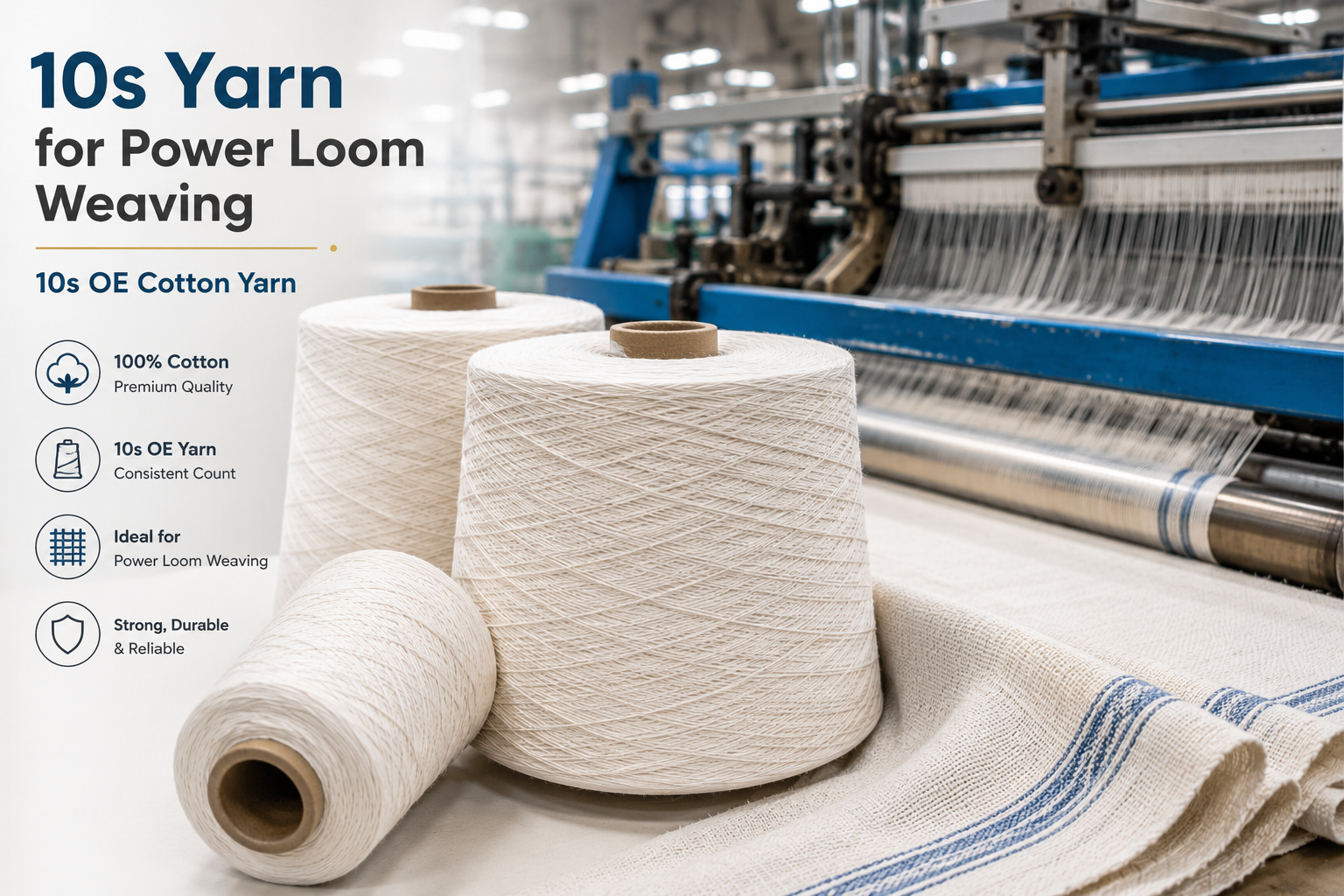
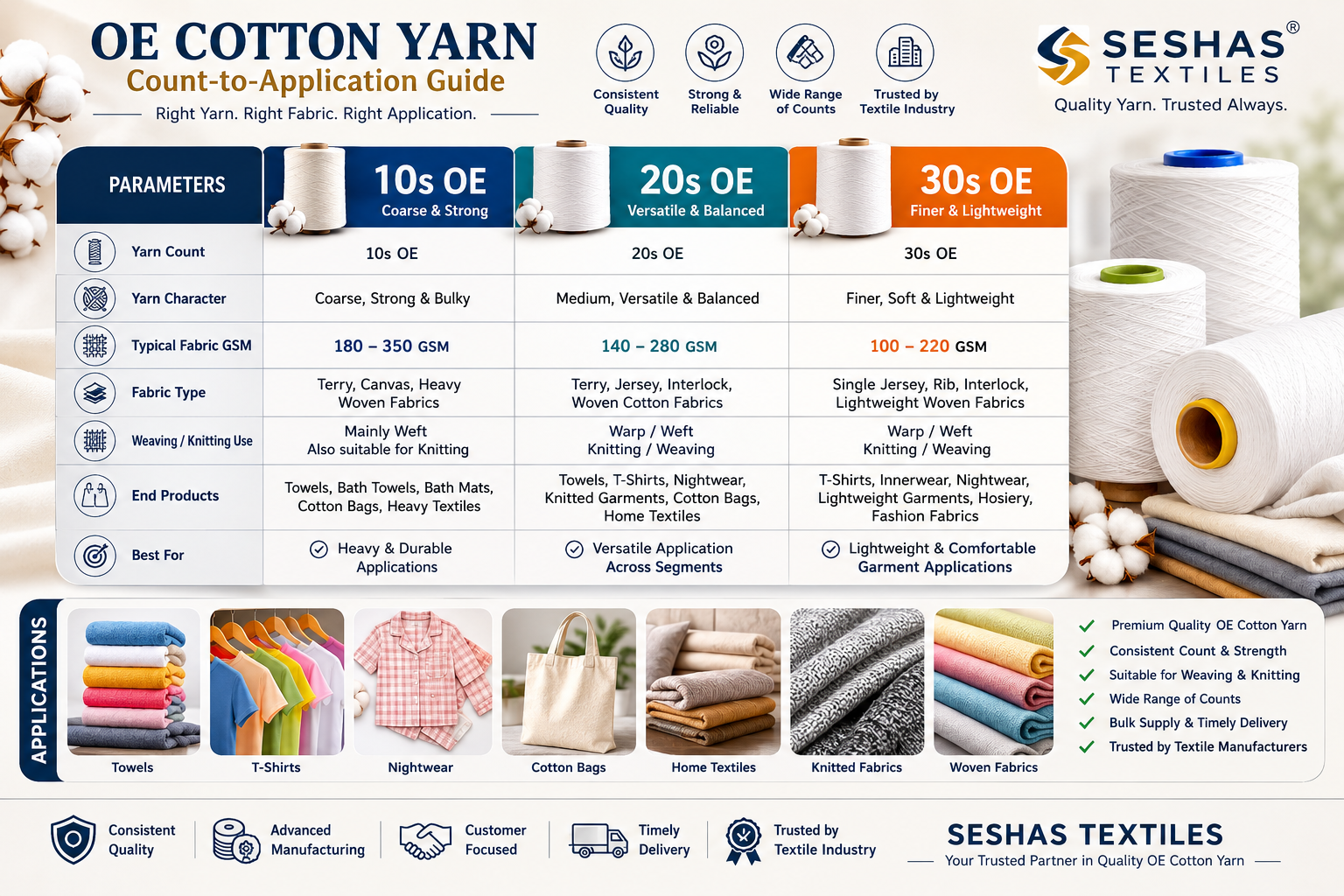
The ideal yarn depends on the type of cotton bag, fabric construction, and intended load.
Cotton fabric is preferred by manufacturers and consumers because of its natural characteristics.
Cotton allows air to circulate through the fabric, making it suitable for clothing and products used in warm climates.
The soft and natural feel of cotton makes it suitable for shirts, nightwear, children’s clothing, towels and other everyday textile products.
Cotton fabrics can be used for garments, towels, bags, home textiles, industrial products and several other applications.
Depending on the yarn count, weave and finishing process, cotton fabric can offer excellent durability for regular use.
Cotton fabrics can be manufactured in different constructions, widths, weights and specifications according to customer requirements.
Understanding the manufacturing process helps buyers evaluate the quality and consistency of a textile supplier.
The manufacturing process begins with selecting suitable cotton yarn based on the required fabric construction and end application.
Yarn count, strength and quality can influence the appearance, texture and performance of the final fabric.
During warping, yarns are arranged and prepared for the weaving process. Proper tension and yarn preparation are important for maintaining fabric consistency.
In woven cotton fabric production, warp and weft yarns are interlaced using weaving machinery.
The weaving construction determines characteristics such as fabric appearance, strength and texture.
The fabric produced directly after weaving is commonly referred to as grey fabric. It can then undergo inspection and further processing depending on the customer’s requirements.
Fabric inspection helps identify defects and maintain consistency in width, construction, appearance and other required specifications.
Depending on the final application, cotton fabric may undergo processes such as bleaching, dyeing, printing, washing or other finishing treatments.
Cotton can be manufactured into many different fabric constructions.
Common categories include:
The right fabric depends on the required application, yarn count, GSM, width, construction and finishing requirements.
Cotton grey fabric manufacturers supply fabric in its woven grey state before further processing.
Grey fabric is widely used by textile processors, garment manufacturers, traders and exporters who require additional dyeing, printing or finishing according to their production requirements.
For bulk buyers, working directly with a reliable grey fabric manufacturer can help maintain consistency across repeated orders.
Cotton is widely used in garment production because of its comfort and versatility.
Cotton fabrics can be used to manufacture:
Garment manufacturers generally select fabric based on yarn count, GSM, width, weave, finish and end-use requirements.
Cotton is also an important material for towel production because of its absorbency and comfort.
Depending on the product specification, cotton textile materials can be used for:
Fabric and yarn selection should be based on the required absorbency, durability and product construction.
Cotton fabrics are also used for reusable bags and textile packaging.
Applications include:
Manufacturers can select suitable fabric constructions according to the required strength, appearance and bag design.
Businesses looking for cotton fabric manufacturers in India should evaluate several factors before placing bulk orders.
Check whether the manufacturer can consistently supply the required quantity.
Confirm important specifications such as:
A reliable manufacturer should have a consistent quality inspection process.
For repeat buyers, consistency between batches is particularly important.
Ask whether the manufacturer can produce fabric according to specific requirements.
Production capacity and logistics support are important when handling regular or large-volume orders.
India has a strong textile manufacturing ecosystem covering cotton cultivation, spinning, weaving, processing, garment manufacturing and exports.
This makes India an important sourcing destination for businesses looking for cotton textile products.
Indian cotton fabric manufacturers can serve both domestic buyers and international customers depending on their production and export capabilities.
Cotton fabrics have applications across several industries.
Used for shirts, dresses, nightwear, uniforms and casual clothing.
Home Textile Industry
Used for towels, furnishings, kitchen textiles and other household products.
Used for reusable shopping bags, tote bags and promotional textile products.
Cotton textile products are commonly used in hotels, restaurants and other hospitality businesses.
Cotton fabrics are widely traded internationally for garment and textile production.
A reliable manufacturing partner can help businesses achieve:
For wholesalers, garment manufacturers, textile traders and exporters, choosing a long-term manufacturing partner can simplify sourcing and production.
Who are cotton fabric manufacturers?
Cotton fabric manufacturers are textile companies that produce fabrics from cotton yarn through weaving or knitting and may provide additional processing and finishing.
Cotton grey fabric is woven cotton fabric that has not yet undergone processes such as dyeing, bleaching or printing.
Consider manufacturing capacity, fabric specifications, quality control, consistency, customization options, pricing and delivery capability.
Yes. Depending on the manufacturer’s capabilities, fabric can be produced according to requirements such as yarn count, width, GSM, construction and finishing.
Yes. Cotton is widely used for garments because of its comfort, breathability and versatility.
Yes. Cotton is commonly used in towel manufacturing because of its absorbency and comfortable feel.
Many manufacturers specialize in bulk production for garment companies, wholesalers, textile traders and exporters. Buyers should confirm minimum order quantities and production capacity with the manufacturer.
Choosing the right cotton fabric manufacturers is an important step for businesses that depend on consistent textile quality and reliable supply. From cotton grey fabrics to materials used for garments, towels, bags and home textiles, manufacturers can provide different fabric specifications based on end-use requirements.
When evaluating a supplier, consider fabric quality, manufacturing capacity, specifications, consistency, quality control and delivery capability. A dependable cotton fabric manufacturing partner can support both regular production requirements and large-volume textile orders.
If you are sourcing cotton fabrics for garment manufacturing, wholesale, home textiles, bags or export requirements, discuss your required specifications with an experienced manufacturer before placing your bulk order.