How to Choose the Right Yarn Count for Garment Manufacturing
Choosing the right yarn count is a critical factor in garment manufacturing. It directly affects fabric quality, durability, texture, and production cost. Manufacturers who understand yarn count selection can produce better garments while maintaining cost efficiency.
What is Yarn Count
Yarn count refers to the thickness or fineness of the yarn. It determines how the fabric will look and feel.
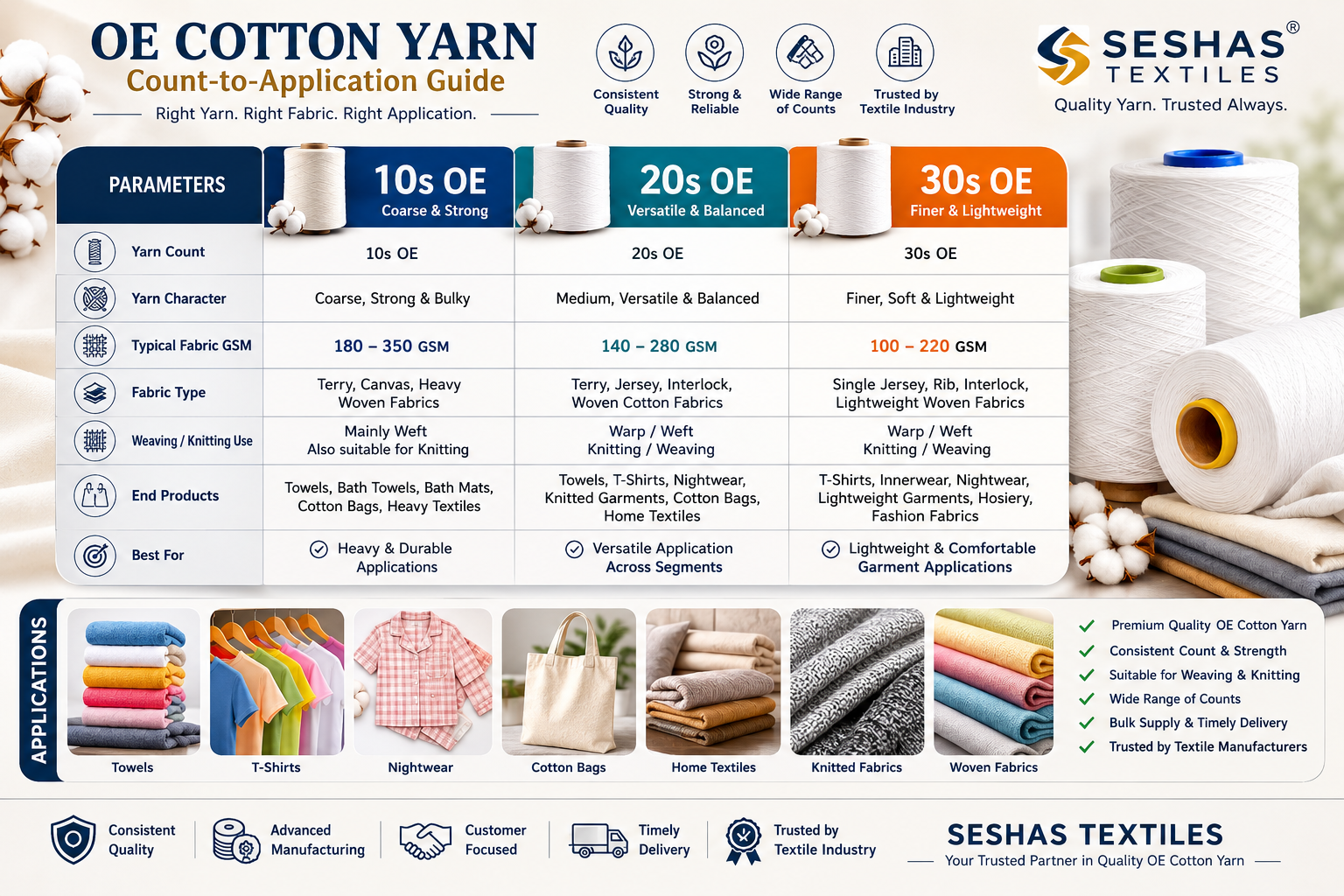
Lower count (10s, 20s): Thicker and stronger yarn
Higher count (30s, 40s, 60s and above): Finer and softer yarn
Low count yarns are used for durability and absorbency, while high-count yarns are used for smoothness and a premium finish.
Importance of Yarn Count in Garment Manufacturing
Selecting the correct yarn count helps in:
- Achieving the desired fabric quality
- Maintaining consistency in bulk production
- Controlling fabric weight (GSM)
- Reducing production defects
- Meeting customer expectations
Incorrect yarn selection can lead to poor fabric performance and increased costs.
Yarn Count Selection Based on Garment Type
T-Shirts
For T-shirt manufacturing, yarn counts between 20s and 30s are commonly used. These provide a balance of softness, breathability, and cost efficiency.
Shirts
Formal and casual shirts require finer yarn counts, typically between 40s and 60s. These yarns produce smooth and high-quality woven fabrics such as poplin.
Towels
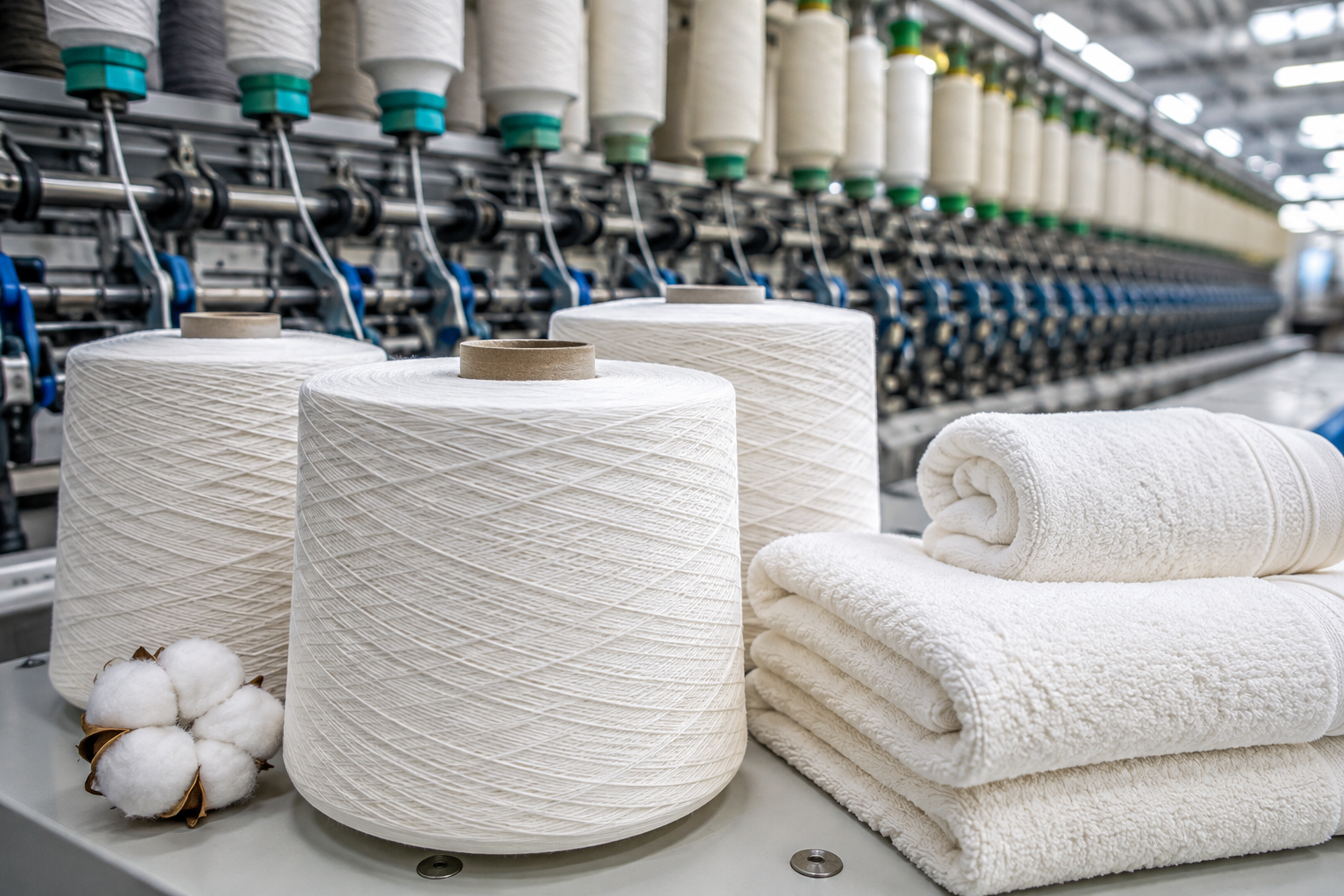
Towel manufacturing uses lower count yarns such as 10s to 20s. These yarns offer high absorbency and thickness, making them suitable for terry fabrics.
Denim and Heavy Fabrics
Denim and heavy-duty garments use yarn counts ranging from 6s to 16s. These yarns provide strength and durability.
Premium Garments
Luxury and high-end garments use yarn counts above 60s. These yarns create lightweight and soft fabrics with a refined finish.
Types of Yarn Used in Garment Manufacturing
Open End (OE) Yarn
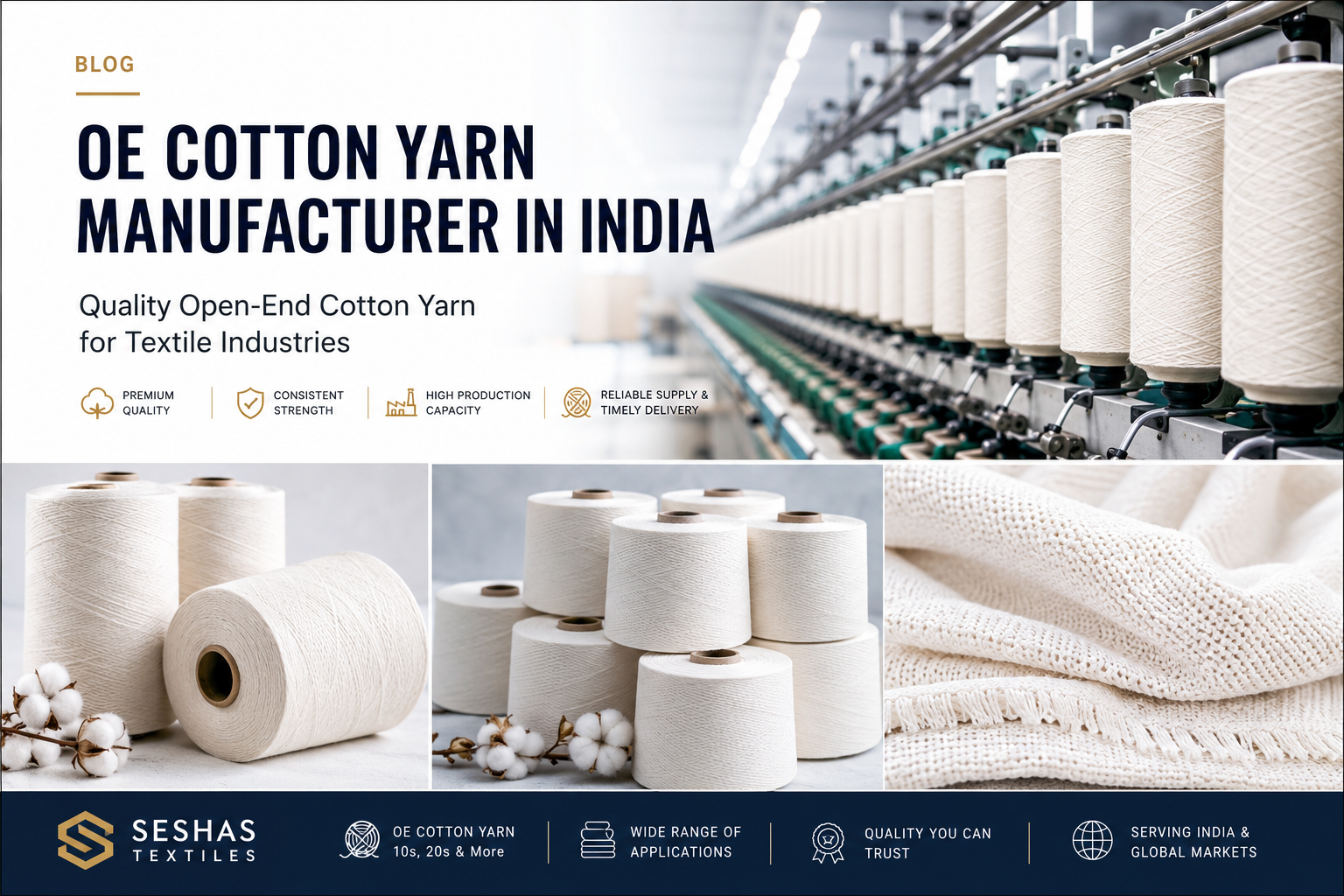
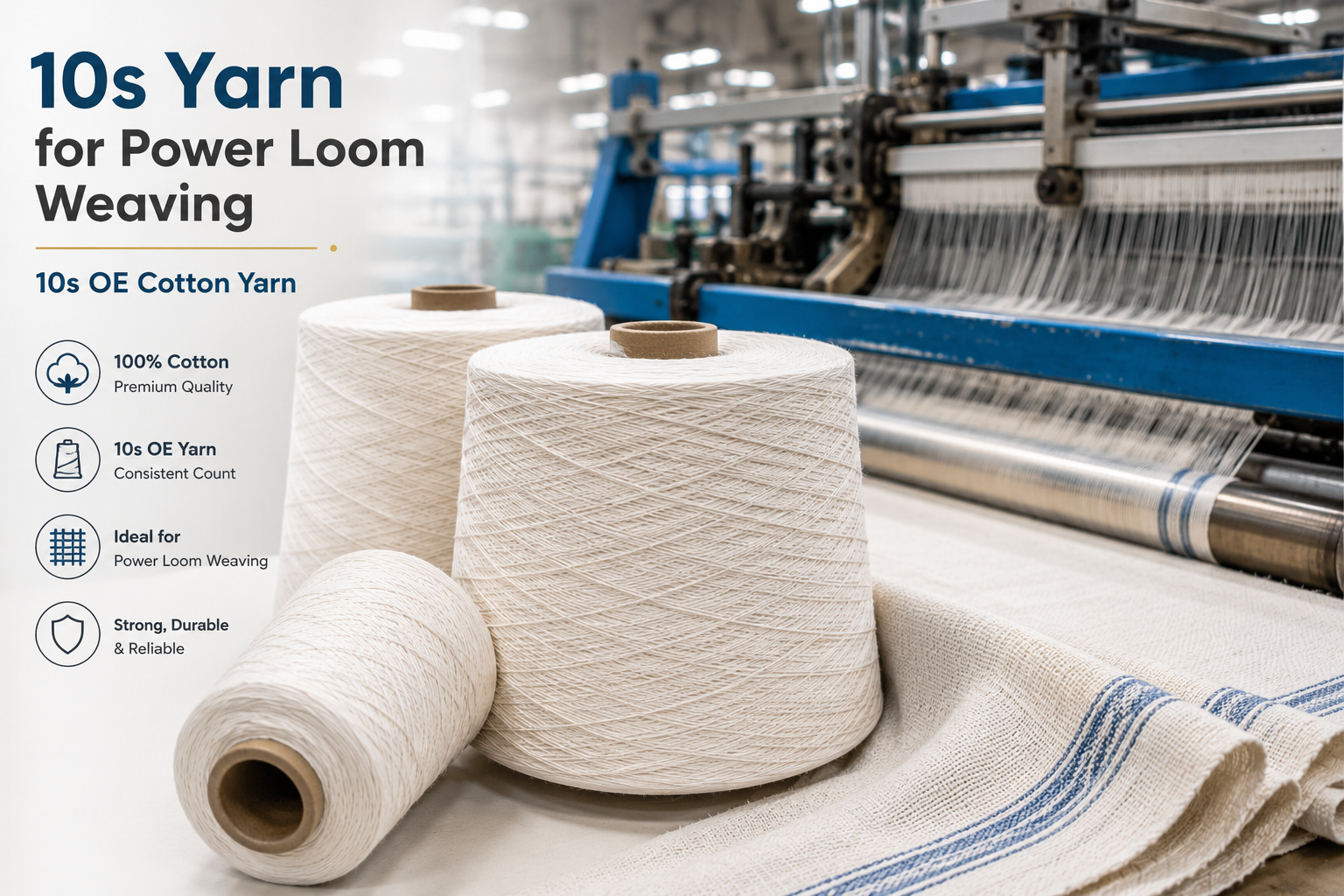
Open-end yarn is cost-effective and suitable for bulk production. It is commonly used in towels, denim, and basic garments.
Ring Spun Yarn
Ring-spun yarn is smoother and finer, making it suitable for premium garments and high-quality fabrics.
Key Factors to Consider When Choosing Yarn Count
End Use of the Garment
The final product determines the yarn requirement. Each garment type has specific performance needs.
Fabric Type
Knitted and woven fabrics require different yarn counts and yarn qualities.
GSM Requirement
Fabric weight is influenced by yarn thickness. Thicker yarns produce heavier fabrics, while finer yarns produce lighter fabrics.
Cost and Market Position
Manufacturers must balance quality and cost depending on whether the target market is budget or premium.
Dyeing and Finishing
Yarn should be contamination-free and suitable for dyeing processes to ensure consistent color quality.
Cotton Yarn Supply by Seshas Textiles
Seshas Textiles is a reliable supplier of cotton yarn for garment manufacturers and textile industries.
Suitable for towel manufacturing and bulk fabric production. Offers strength and high absorbency.
Suitable for garment manufacturing and general fabric use. Provides consistent quality and performance.
Bulk supply is available with consistent quality and timely delivery.
Location: Rajapalayam, Tamil Nadu
WhatsApp: +91 9363913426
(Fastest response – Message anytime!)
Phone: 9500787216 / 936391342
sales@seshasstextiles.com
info@seshasstextiles.com
Conclusion
Choosing the right yarn count is essential for producing high-quality garments. It influences fabric performance, production efficiency, and overall cost. Manufacturers should align yarn count with fabric type, garment application, and market requirements to achieve the best results.
Partnering with a reliable supplier ensures consistency in yarn quality and supports long-term manufacturing success.